Voter register

The voter register is the backbone of electoral integrity. In Serbia, documented abuses - including organized voter migration and concentrations of registrations at single addresses - have raised persistent questions about whether election results reflect the genuine will of voters. A Commission for the Audit of the Voter Register was established to provide independent verification, but has been systematically denied access to the data it needs to function. Key data categories remain inaccessible, citizens still cannot meaningfully verify who is registered at their address. The audit process is being hollowed out before it has had a chance to produce results.
Latest assessment of the UVR process
June

CRTA mapped the full methodology of the Commission for the Audit of the Unified Voter Register against the data access actually provided to date. The assessment finds that 95% of planned checks - everything that requires analysing the register as a whole, cross-referencing source records, or examining system security - cannot be carried out. Full access, required under Article 22j of the UVR Law, has not been provided, while the Commission's reporting deadlines continue to run.
May

Five months after it was established, the voter register audit commission has adopted its methodology and begun initial activities, but the substantive verification of the register has not started for lack of data access. The methodology rests on aggregate analysis of the register and cross-checking against source registries, while the access granted is limited to looking up voters one at a time, with no aggregate, historical, or cross-register view. The Ministry of Public Administration and Local Self-Government, which manages the register, has not provided the access the law guarantees. Under the work plan, the Commission faces possible automatic termination if access is not secured by 31 May 2026.

The amendments to the Law on the Unified Voter Register, adopted in November 2025, established the Commission for the Revision, Verification and Control of the Accuracy and Updating of the Voter Register - a permanent, independent expert body of 10 members and 10 deputy members, nominated by the ruling majority, the opposition, and civil society. The Commission has a five-year mandate to audit the Unified Voter Register and address its structural weaknesses, and takes decisions by a qualified majority of seven votes, including at least two from each group, which guards against one-sided control. It should complete its first audit within nine months of being constituted and report to Parliament.

What are the steps in the revision process?

The objective of the Commission is to restore public trust in the voter register through a comprehensive, fact-based revision. The process involves five steps. The Commission is currently at the start of step 2.

Step 1

The Commission becomes operational

Done
Step 2

It secures access to relevant data

In progress nowFacing obstructions by the government
Step 3

It analyses the data and adopts recommendations

Upcoming
Step 4

Relevant authorities implement these recommendations

Upcoming
Step 5

A more accurate and secure voter register

Goal

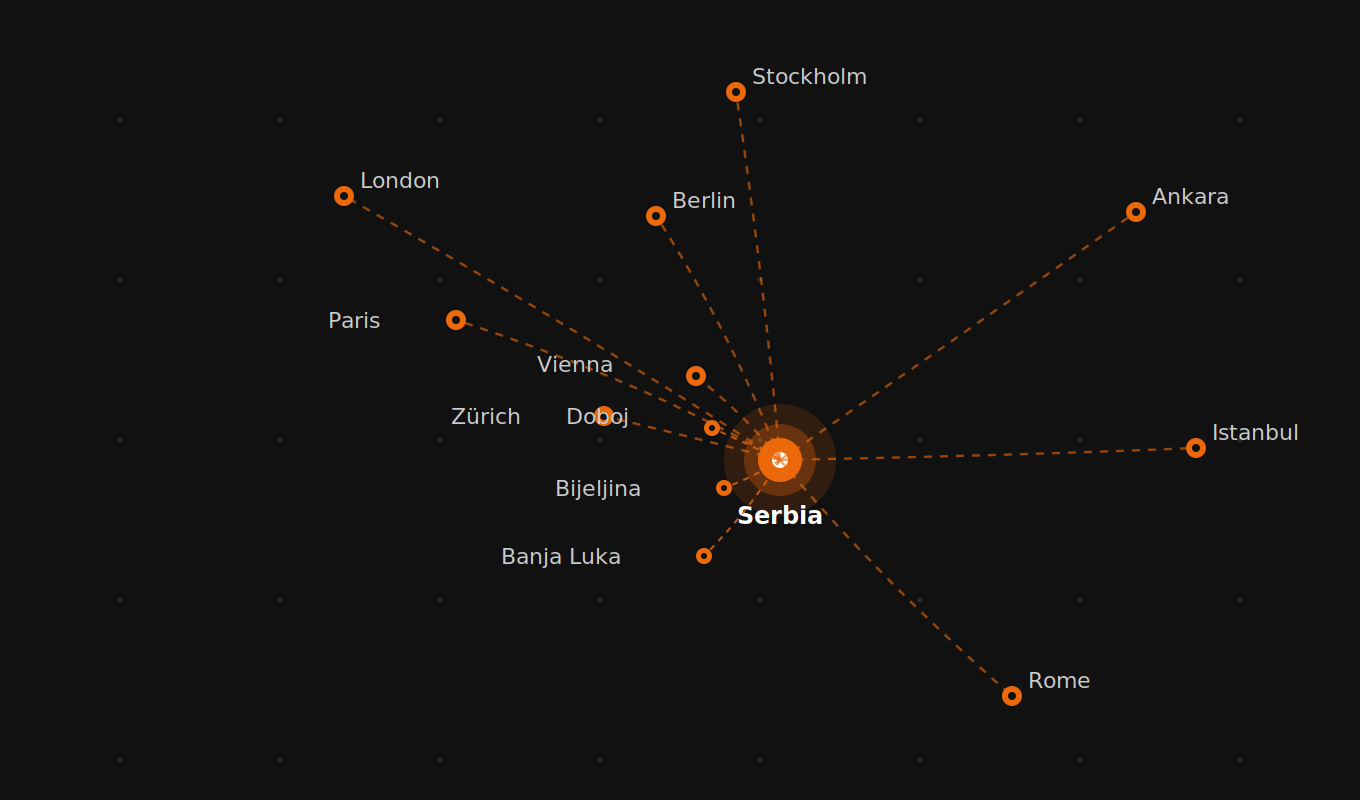
Organized voter migration

Na izborima 2023. godine, Crta je dokumentovala slučajeve organizovane migracije birača kao oblika izbornog inžinjeringa. Ova praksa podrazumeva koordinisano i privremeno preregistrovanje birača u druge opštine u cilju uticaja na ishod lokalnih izbora. Dokazi su ukazivali na sistemske obrasce - uključujući veliki broj birača prijavljenih na jednoj adresi i nagle poraste broja birača u pojedinim opštinama - koji su ozbiljno dovodili u pitanje verodostojnost biračkog spiska.

Ovi nalazi postali su jedan od ključnih okidača za zahteve za reviziju jedinstvenog biračkog spiska. Bez tačnog i transparentnog spiska, zaštitni mehanizmi od manipulacija ostaju slabi, a poverenje javnosti u izbore nastavlja da opada. Dokumentovani obim i organizovanost migracije birača 2023. godine ukazali su na hitnu potrebu za nezavisnim i temeljnim procesom verifikacije - onakvim koji može da identifikuje nepravilne unose, razjasni evidencije o prebivalištu i obnovi poverenje u integritet izbornog sistema.
Update
Auditing the voter register: purpose, impact, and where we are at the moment
The purpose of the audit is to determine, on the basis of evidence, whether the Unified Voter Register can be trusted — and to correct the problems it finds. It does this by testing both the accuracy of the data and the resilience of the system that maintains it, proceeding in sequence from first indications, through deeper checks, to findings and conclusions.
Update
Where the UVR Commission stands as the 31 May deadline nears
Five months after it was established, the Commission has adopted its methodology and begun initial work, but the authorities have not granted the data access the law requires. Without it, the substantive audit cannot begin - and the body faces possible termination at the end of May.
Update
What is the UVR Commission?
A body established by Parliament to audit the Unified Voter Register and help rebuild public trust in it. It is meant to bring together nominees of the ruling majority, the opposition, and civil society, and to take decisions only with cross-group agreement.
Brief
Opposition SSP proposes new framework for diaspora voting and residence records
The proposals would extend voting rights in national elections to citizens with actual residence abr...
Update
Membership of the voter register audit commission elected
On 28 January, parliament elected 10 members and 10 deputy members of the Commission for the Audit, Verification and Control of the Accuracy and Updating of the Voter Register. Eight pairs of seats went to parliamentary groups and two to civil society representatives - CRTA and CESID.
Update
The Authorities Are Responsible for Disorder in the Voter Register
Impunity protects parts of institutions that, instead of enforcing and protecting the law, participate in unlawful activities.
Update
2023 Elections – Final Observation Report – Summary
The extraordinary parliamentary and Belgrade elections were not free and fair.
Update
Preliminary Statement on Organized Voter Migration Ahead of the December 17, 2023 Elections in Serbi...
Organized voter migration is a type of electoral engineering that includes coordinated behavior of voters that temporarily change their residence to another constituency to influence voting results. In Serbia, in the Elections 2023 it might have been used on a large scale to influence the outcomes of the local elections strategically called only in one part of cities and municipalities.
CRTA+ is part of CRTA’s work to document developments related to democracy, the rule of law, and accountability in Serbia.
Crta @ 2025. All rights reserved.