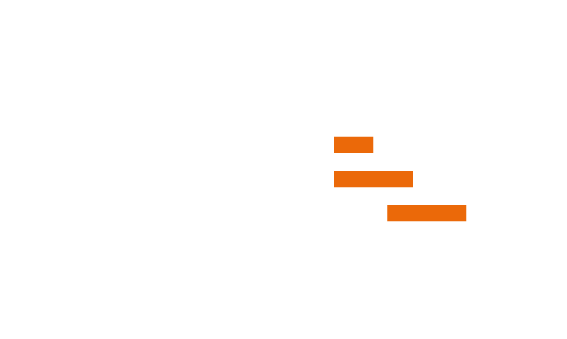


Ruling majority and opposition in the permanent composition
nominated by parties of the ruling majority nominated by opposition parties
The dashed line marks nine votes - the majority of the total number of members needed for a decision in the permanent composition. Party affiliation compiled by CRTA.
How the commission is built
Members are nominated by parliamentary groups in proportion to their share of seats, and no single group may nominate more than half of them. That safeguard is narrower than it looks: the Venice Commission and ODIHR warned in 2022 that it "does not prevent a formal or informal coalition of parties from nominating a majority of members of the REC".
Decisions are taken by a majority of the total number of members, which in the permanent composition means nine of seventeen. On any contested question, the members nominated by the governing majority can therefore decide without a single opposition vote, and politically sensitive matters are settled by outvoting rather than by consensus or professional argument.
In the permanent composition appointed in November 2024, SNS has the largest number of members - eight of seventeen (47.06 per cent) - and seven deputy members (41.18 per cent). Parties of the ruling majority hold eleven members and eleven deputy members, 64.71 per cent of each; opposition parties hold six of each (35.29 per cent), or 12 of the 34 places in total.
Articles 12 and 18, Law on the election of members of parliament
Sources: Law on the election of members of parliament · Venice Commission and ODIHR, joint opinion CDL-AD(2022)046
Once electoral lists are proclaimed, the commission works in what the law calls its extended composition: each submitter of a proclaimed list nominates one member and one deputy, whom the commission then appoints. The extended composition works until the overall report on the election results becomes final.
The intention is mutual control between contestants. The effect is that the body deciding on complaints, on polling board reports, and on the results consists almost entirely of nominees of the parties contesting the election. In 2022 the Venice Commission and ODIHR recommended "reviewing the justification and function of the extended composition". No such review has taken place.
For these elections it is only now taking shape: electoral lists must be submitted by 4 October, and from the moment a list is proclaimed its nominees sit in the commission. The same entitlement runs down to every polling board, which is what makes it worth contesting an election without meaning to win one - see the next point.
Article 22, Law on the election of members of parliament
Because every proclaimed list is entitled to a member and a deputy in the commission’s extended composition and in each of the roughly 8,300 polling boards, submitting a list is worth something even to those who have no intention of winning votes. The arithmetic is simple: a single list contesting an election can nominate around 17,000 people to polling boards, so a party standing behind several proxy lists multiplies its presence in the bodies that run the vote and count the ballots. Because that work is paid from the budget, it is paid to do so.
CRTA has documented such lists in every recent cycle it observed. Before the local elections of 29 March 2026 it assessed that 19 of the 50 proclaimed lists showed clear indicators of being proxy lists: no visible activity during the campaign or between elections, no explanation of who financed the collection of their signatures, no public calls for candidates or campaign stands, names built to resemble those of genuine lists, and lists nominally representing a national minority that is not present in the municipality at all.
The amendments of May 2026 make this easier rather than harder. The restriction under which a voter could support only one candidate list has been removed, so the required signatures are now easier to collect for every contestant. In a process already burdened by contestants of questionable authenticity, and with the abuse of voter support signatures at previous elections left unprosecuted, CRTA’s assessment is that the provision as adopted risks encouraging the registration of lists whose authenticity is in doubt. The obligation to lodge an electoral guarantee was abolished at the same time, so such lists can also more easily acquire the right to the first tranche of public funds, which proportionately reduces what is left for those legitimately contesting the election.
Articles 22 and 39, Law on the election of members of parliament
Sources: CRTA on the pre-election campaign, 25 March 2026 · BBC News in Serbian, May 2026 · Danas, 10 March 2026
The commission employs nobody. Its professional and administrative work is done by the service of the National Assembly, and its secretary is at the same time Secretary General of the National Assembly. The secretary and the deputy secretary are appointed by parliament on the proposal of the Speaker, from among parliament’s own employees.
The Venice Commission and ODIHR described the consequence in 2022: the commission "does not have its own permanent separate secretariat but relies on technical assistance from the staff and services of the National Assembly", and "the capacity of its secretariat and the current political appointment model do not provide the REC with professional authority".
ODIHR’s recommendation that the commission be given sufficient administrative and technical capacity, including its own permanent secretariat, is recommendation No. 9. ODIHR reiterated it in April 2024 and repeated it again in March 2026, while assessing the amendments adopted in May. It has not been implemented.
Article 21, Law on the election of members of parliament
Sources: ODIHR legal opinion, 6 March 2026 · CDL-AD(2022)046 · REC, composition of the commission
Every new convocation of the National Assembly is required to appoint a new permanent composition of the commission within six months of being constituted. The body that runs elections is therefore rebuilt after every election, and with early elections as frequent as they have been in Serbia, a composition rarely serves anything close to a full four years.
The present composition was appointed on 27 November 2024 by the convocation dissolved on 9 September 2026. It will administer the 25 October elections and remain in office until the next convocation replaces it.
Article 17, Law on the election of members of parliament
Source: Decision appointing the permanent composition of the REC, Official Gazette 94/2024
Nobody sits on the commission as their job. Members keep their regular employment and are engaged alongside it, so once the results are final they go back to their day jobs. The commission is under no obligation to meet, work or decide on electoral questions between elections.
That is what the law envisages. Of the twenty-two competences listed in Article 24, nearly all concern the conduct of an election. Only a handful apply outside an electoral cycle:
- monitoring the application of the law and issuing opinions on it
- appointing and dismissing members of election bodies
- prescribing training programmes and running training for local electoral commissions and polling boards
- informing and educating voters about how to exercise their voting rights
- prescribing a code of conduct for members of election bodies
Its most substantial standing power is, in other words, educational.
Article 24, Law on the election of members of parliament
To be appointed a member or deputy member, a person needs higher education in law. Nothing more. There is no requirement of knowledge of electoral law, and no requirement of experience in election administration. The Venice Commission and ODIHR noted that a law degree "alone hardly guarantees expertise and professional skills in electoral administration", and recommended strengthening the professional background and expertise of the commission’s members.
The amendments adopted in May 2026 did introduce mandatory training and certification, valid for three years - but for work in local electoral commissions and polling boards, and only from 1 January 2028. Members of the Republic Electoral Commission itself are not covered by it.
Articles 16 and 24a, Law on the election of members of parliament
What that produces
Example 1: November 2023 - objections that never make it into the record. At a session on 6 November 2023, members nominated by opposition parties jointly proposed that objections by polling board members about irregularities be an integral part of the polling board report, rather than a separate sheet. Their argument was that such objections had been systematically lost on the way from the polling station to the commission, leaving no official trace of the irregularity. The proposal was voted down.
Example 2: March 2022 - the president takes a side. On 25 March 2022, days before the elections, the president of the commission, Vladimir Dimitrijević, wrote to the President of the European Commission rejecting as "malicious and tendentious" the claims of 38 civil society organisations and 36 professors about a planned voter fraud, and stated that allegations of planned electoral fraud "are absolutely untrue and tendentiously placed in order to justify the opposition’s poor result in advance". The presiding officer of the body responsible for the impartial conduct of an election argued the case of one side of that election.
Sources: Danas, 7 November 2023 · REC, statement of 25 March 2022
The commission was designed as an administrative and technical body for organising the vote, and its competences match that design. It has no authority over the voter register, over media coverage of the campaign, or over campaign finance - the three areas in which ODIHR’s longstanding recommendations for Serbia remain unaddressed.
Those areas belong to other institutions: the voter register to the Ministry of Public Administration and Local Self-Government, broadcast coverage to the Regulatory Authority for Electronic Media, campaign finance to the Anti-Corruption Agency. Expanding what the commission may do, without first changing how it is composed and staffed, moves those questions into a body with the same political dependency.
The Unified Voter Register is kept by the Ministry of Public Administration and Local Self-Government and updated by municipal and city administrations. The commission has no authority over it and does not audit it.
Amendments adopted on 7 November 2025 changed two things. Members and deputy members of the commission now have the right to inspect all data in the register except the personal identification number, through a dedicated module with two-factor authentication, and may file complaints about its accuracy. Separately, the law created a standing commission for the audit of the register: ten members appointed by parliament, eight nominated by parliamentary groups and two by certified observer associations, with a five-year term. Members of the Republic Electoral Commission may not sit on it, and the commission has one representative there without the right to vote.
The audit commission was constituted on 28 February 2026; its members obtained full access to the data on 6 July 2026.
Articles 21 and 22a-22o, Law on the Unified Voter Register
Source: Law on the Unified Voter Register, Official Gazette 104/2009, 99/2011, 44/2024, 96/2025
What has changed, and what has not
Parliament adopted amendments to the electoral laws on 20 May 2026. They introduce mandatory training and certification for work in local electoral commissions and polling boards from 1 January 2028; allow a voter to support more than one electoral list; allow citizens’ groups to submit national minority lists; remove the automatic rejection of a list that contains a deficiency; and shorten Constitutional Court deadlines in electoral disputes.
What they do not touch: how the commission is composed, who nominates its members, the extended composition, and the absence of a secretariat of its own. Assessing the drafts in March 2026, ODIHR listed the "composition of the electoral administration" first among the recommendations still outstanding, and recalled its 2022 joint opinion with the Venice Commission.
Official Gazette 47/2026
The 2022 joint opinion of the Venice Commission and ODIHR sets out the reform in a single recommendation:
On the composition and functioning of electoral administration: strengthening the professional background and expertise of its members, the balance between the parties supporting the government and the opposition and considering the possible inclusion of independent members who are not directly appointed by the parties or who require a broad consensus for their nomination; reviewing the justification and function of the extended composition. Venice Commission and OSCE/ODIHR, CDL-AD(2022)046, para. 20
The body of the opinion adds the options: including members from institutions perceived as neutral, detaching appointments from the parliamentary term or staggering them so that not all members are appointed in the same convocation, and requiring a qualified majority for certain decisions.
None of this has been done. In July 2026, ODIHR’s needs assessment mission reported that "a number of ODIHR NAM interlocutors questioned the impartiality and political neutrality of election administration at all levels", and recommended a full observation mission with 32 long-term and 300 short-term observers for the 25 October elections.
Sources: CDL-AD(2022)046 · ODIHR needs assessment mission report, 28 July 2026
Who sits on it
This is the permanent composition, appointed by the National Assembly on 27 November 2024. One change since: on 10 July 2026 Nikola Jelić was dismissed and Zoran Lukić appointed in his place. The appointment decisions do not record who nominated whom; the parliamentary groups shown below were compiled by CRTA.
The list below is therefore not the full commission that will decide on complaints and results. As electoral lists are proclaimed for these elections, the commission is joined by one member and one deputy for each proclaimed list, and it then works in its extended composition until the overall report on the results becomes final.
| Member | Nominated by | Deputy member | Nominated by |
|---|---|---|---|
| Vladimir Dimitrijević president | SNS | Marko Janković deputy president | SNS |
| Vesna Stojković | SNS | Branibor Jovičić | SNS |
| Tatjana Kitanović | SNS | Milovan Amidžić | SNS |
| Marija Jovanović | SNS | Miloš Srećković | SNS |
| Veljko Perović | SNS | Nemanja Popović | SNS |
| Zoran Lukić | SNS | Marina Đukanović | SNS |
| Maja Pejčić | SNS | Mahir Bećirović | SNS (Zukorlić) |
| Jasmina Milošević | SNS | Vladimir Jestratijević | PUPS |
| Tanasije Marinković | SSP | Jasmina Belić | SSP |
| Zlata Jusufović | NPS | Miloš Pavlović | NPS |
| Miljkan Karličić | SPS | Dijana Stojanović | SPS |
| Marko Danilović | DSS | Ana Damnjanović | DSS - POKS |
| Vladimir Dragaš | ZLF | Marica Bursać | Ekološki ustanak |
| Sofija Mandić | Srce | Vesna Boljević Grujičić | MI - Glas iz naroda |
| Dušan Dinčić | DS | Marko Živanović | Nestorović |
| Ana Stamatović Jevđić | Ruska stranka | Jelena Milenković | JS |
| Đula Ladocki | SVM | Brankica Jović | SDPS |
Secretary: Srđan Smiljanić, Secretary General of the National Assembly. Deputy secretary: Dragana Odović. Both take part in the work of the commission without the right to vote, as does a representative of the Statistical Office.
Ruska stranka sits in the Zdrava Srbija - Ruska stranka - Ujedinjena seljačka stranka parliamentary group. Party affiliation compiled by CRTA.
Sources: REC, composition of the commission · Decision amending the appointment decision, Official Gazette 63/2026
Legal framework as of 10 September 2026: Law on the election of members of parliament (Official Gazette 14/2022 and 47/2026) and Law on the Unified Voter Register (Official Gazette 104/2009, 99/2011, 44/2024 and 96/2025).