
CRTA+ monitors the democracy area of the Reform agenda.


This monitoring highlights the gap between reforms defined on paper and their implementation in practice, as well as whether they deliver tangible benefits for citizens.
Reform and Growth Facility

3/98
Steps achieved it total


Fundamentals and Rule of Law Policy Area
1/21
Steps achieved
1 out of 21 steps achieved in the Fundamentals and Rule of Law policy area.
Released funds

167 ml / 1,6 bn

Funds released based on the fulfilled conditions.

Source: European Commission scoreboard, last updated 29.05.2026.
reform-monitor.org

June

CRTA mapped the full methodology of the Commission for the Audit of the Unified Voter Register against the data access actually provided to date. The assessment finds that 95% of planned checks - everything that requires analysing the register as a whole, cross-referencing source records, or examining system security - cannot be carried out. Full access, required under Article 22j of the UVR Law, has not been provided, while the Commission's reporting deadlines continue to run.
May

Five months after it was established, the voter register audit commission has adopted its methodology and begun initial activities, but the substantive verification of the register has not started for lack of data access. The methodology rests on aggregate analysis of the register and cross-checking against source registries, while the access granted is limited to looking up voters one at a time, with no aggregate, historical, or cross-register view. The Ministry of Public Administration and Local Self-Government, which manages the register, has not provided the access the law guarantees. Under the work plan, the Commission faces possible automatic termination if access is not secured by 31 May 2026.

The amendments to the Law on the Unified Voter Register, adopted in November 2025, established the Commission for the Revision, Verification and Control of the Accuracy and Updating of the Voter Register - a permanent, independent expert body of 10 members and 10 deputy members, nominated by the ruling majority, the opposition, and civil society. The Commission has a five-year mandate to audit the Unified Voter Register and address its structural weaknesses, and takes decisions by a qualified majority of seven votes, including at least two from each group, which guards against one-sided control. It should complete its first audit within nine months of being constituted and report to Parliament.

Reform Agenda - Fundamentals: Democracy

Under the Reform Agenda, Serbia committed to implementing two Composite Steps within the area of Fundamentals: Democracy, with clearly defined deadlines - December 2024 for the first step and December 2025 for the second. These commitments and deadlines were not externally imposed; they were undertaken by the Serbian authorities as part of their own reform roadmap.

Neither deadline was met. None of the key reforms envisaged under these Composite Steps have been fully implemented. Some processes were formally launched but left incomplete or failed in the process; others did not move beyond declarative or procedural stages. More importantly, the principles explicitly identified in the Reform Agenda - ensuring public trust, proactively addressing systemic problems, maintaining transparent processes, and providing timely information - have not been upheld.

Instead of strengthening electoral integrity and institutional accountability, the reform trajectory has produced limited procedural activity without substantive results. In doing so, it has not only failed to deliver reform, but has further undermined public confidence in the credibility of the process itself.

First Composite Step (due by December 2024)

(subject to ODIHR assessment as the verification mechanism)
  • Working Group composed in accordance with the ODIHR recommendation. This would mean that the inter-agency Working Group on Co-ordination and Follow-up of the Implementation of Recommendations for the Improvement of the Electoral Process should act in full transparency, with the inclusion of relevant stakeholders, such as civil society organizations.
  • A meaningful audit of the voter register completed in accordance with ODIHR recommendations. This step means the establishment of the Commission which will oversee and control the voter register. The Commission should include representatives of the opposition, as well as relevant civil society organizations. The implementation of this recommendation should be recognized/verified by ODIHR.
  • REM Council re-elected (in line with the Law on Electronic Media) in a transparent and inclusive process. A clear explanation of this step is given in the relevant law.
Brief
Preliminary Analysis of the Proposed Amendments to the Electoral Laws
The Reform Agenda envisages amendments to five key laws in the field of electoral legislation by the...
Brief
Proposed amendments to the public broadcasting law tighten political control and leave key reforms unfinished
The draft amendments to the Law on public media services introduce some formal improvements but fail...
Brief
Draft amendments to the electronic media law offer cosmetic fixes and leave regulatory independence unaddressed
The draft amendments to the Law on electronic media enter parliament in May 2025 without prior publi...
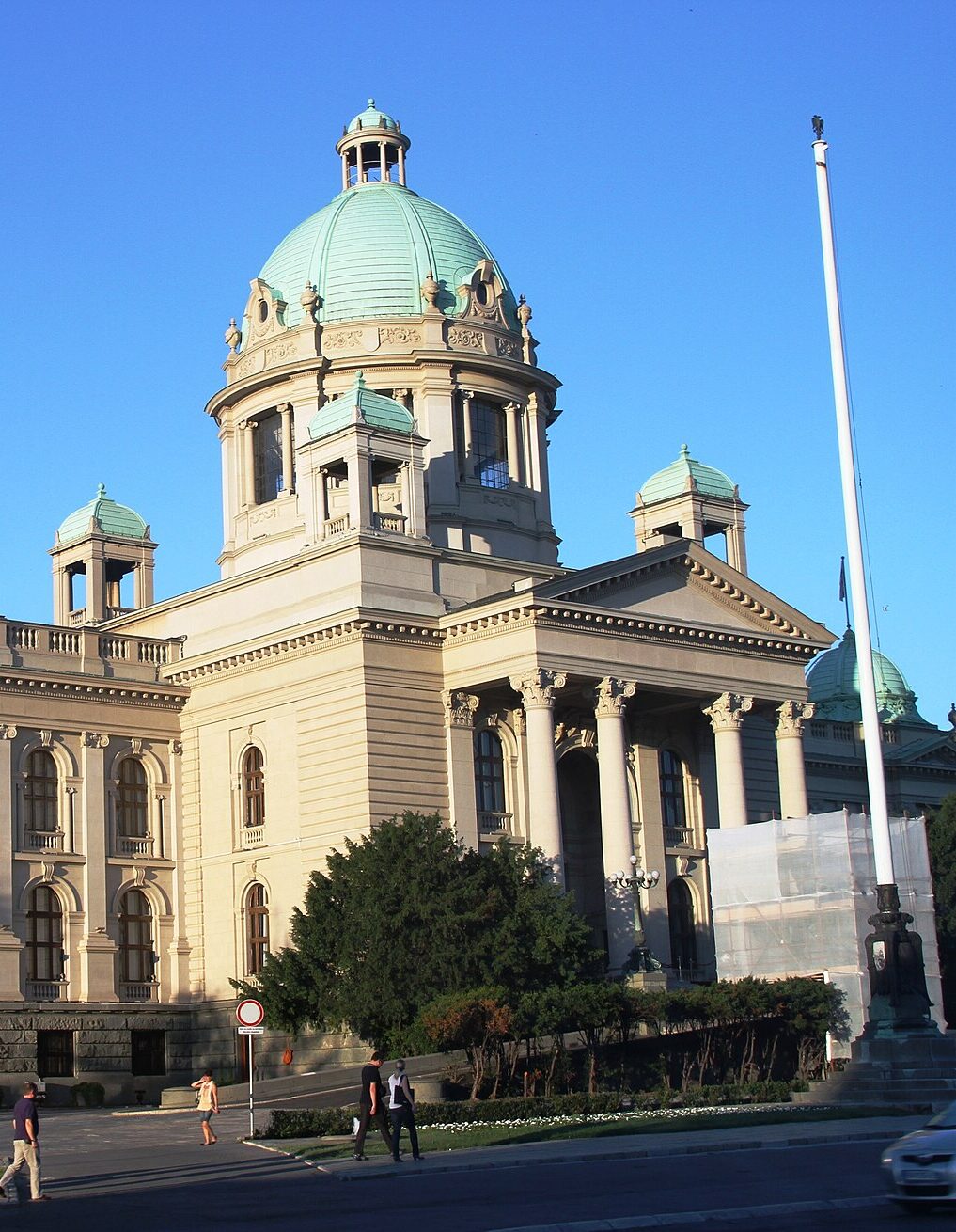
Serbian Parliament
Brief
Amendments to Key Judicial Laws: Systemic Changes Without Public Consultation
On 28 January 2026, the National Assembly of the Republic of Serbia adopted a set of five laws intro...

Second Composite Step (due by December 2025)

  • Relevant legislation to address ODIHR and Council of Europe key recommendations revised and adopted. The indicative list of laws subject to final approval of the Working Group includes amendments to the following laws: Law on the Election of Members of Parliament, Law on Local Elections, Law on the Constitutional Court, Law on the Prevention of Corruption, and the Law on Financing Political Activities.
  • Improved capacities of the Republic Electoral Commission and granting it its own Secretariat. Achieving this step would mean that the Secretariat is established by the decision of the National Assembly of the Republic of Serbia.
Brief
Preliminary Analysis of the Proposed Amendments to the Electoral Laws
The Reform Agenda envisages amendments to five key laws in the field of electoral legislation by the...
Brief
Proposed amendments to the public broadcasting law tighten political control and leave key reforms unfinished
The draft amendments to the Law on public media services introduce some formal improvements but fail...
Brief
Draft amendments to the electronic media law offer cosmetic fixes and leave regulatory independence unaddressed
The draft amendments to the Law on electronic media enter parliament in May 2025 without prior publi...
Serbian Parliament
Brief
Amendments to Key Judicial Laws: Systemic Changes Without Public Consultation
On 28 January 2026, the National Assembly of the Republic of Serbia adopted a set of five laws intro...

Updates

CRTA+ is part of CRTA’s work to document developments related to democracy, the rule of law, and accountability in Serbia.
Crta @ 2025. All rights reserved.