- Home
- Elections 2026
- Key Issues
- Public Sentiments
- Serbia in Reports
- Reform Agenda
- About Us
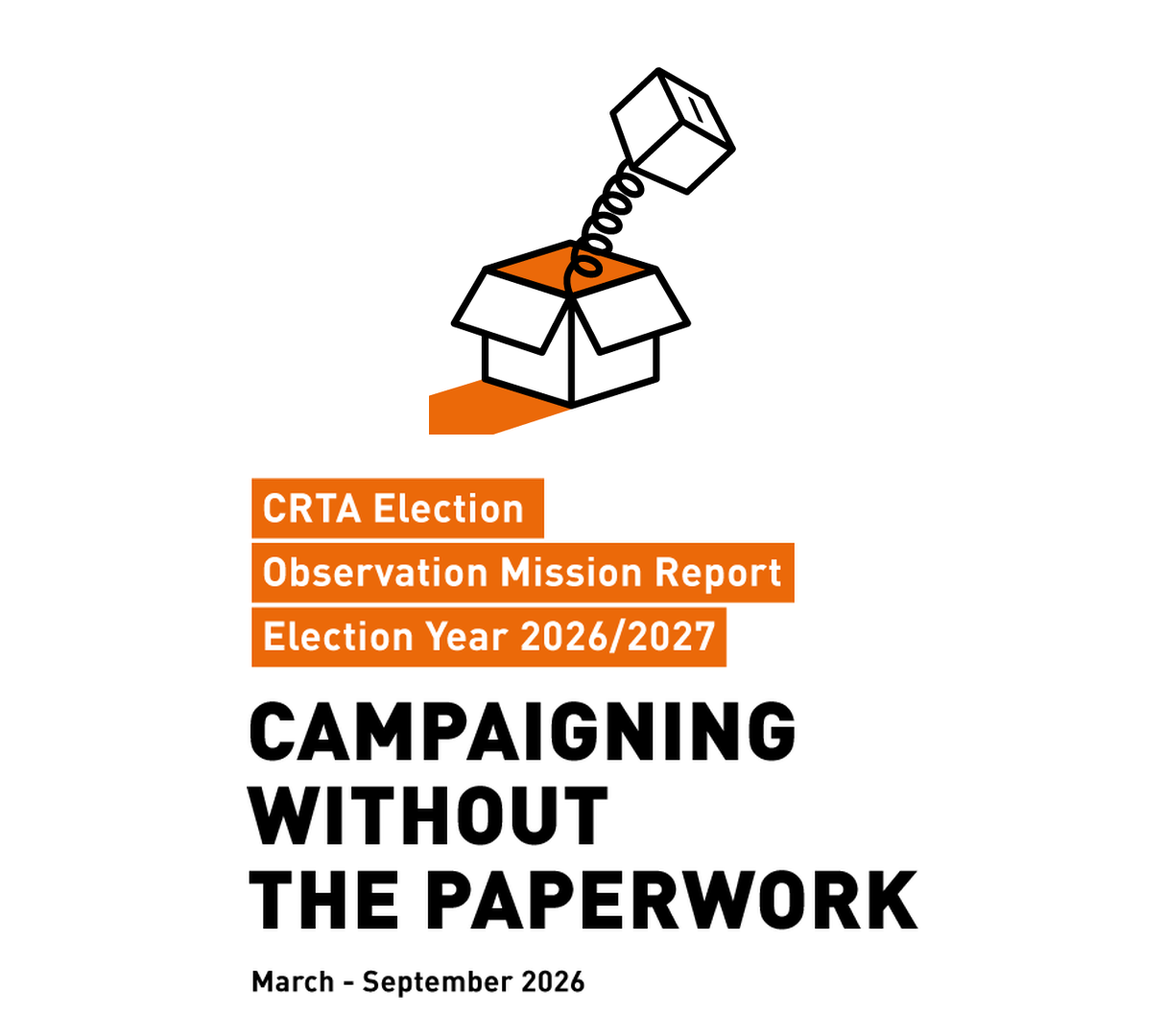
The chapters can be read in any order. Download the full report as a PDF. How the report was produced is set out in the observation methodology.
Key features
CRTA submitted an initiative to the Agency for Prevention of Corruption (Article 42 of the Law on Financing of Political Activities) for oversight of the Serbian Progressive Party over the "United Serbia" rally in Užice, on the suspicion that it spent election campaign funds for purposes other than intended before the elections had been called.
More than 1,200 activities of senior state officials in four months (May to August), 18% of them with elements of the misuse of public resources; President Vučić the most active.
Almost one billion euros in one-off state payments announced through just two measures - double each of the packages disbursed ahead of the 2022 and the 2023 elections.
Every seventh recorded activity of the Serbian Progressive Party had elements of clientelism.
The telephones of at least 14 members of the Student Movement and the Green-Left Front were infected with Pegasus spyware.
More than 1,300 manipulative headlines since the beginning of the year, almost half of them aimed at discrediting political opponents.
The Speaker of the National Assembly, Ana Brnabić, publicly attributed to students the intention of drawing up lists for "shooting, hanging and head-shaving" - CRTA filed a criminal complaint for racial and other discrimination.
An incident - a threat, a clash or an attack - recorded on almost every other day.
Of the 54 ODIHR recommendations from 2023 and 2024, the conditions were created for 8 to be fulfilled (only 1 of them a priority recommendation) and 20 partially.
The limit on donations by natural persons was reduced sixfold; the campaign expenditure limit (six million euros) was set at the level of the Serbian Progressive Party's average spending between 2016 and 2023.
The Republic Electoral Commission did not adopt the instruction on training for polling boards in time, but did order 30,000 voting booths under an urgent procedure before the elections were called, without a clear legal basis for them.
The Regulatory Authority for Electronic Media (REM) has been deadlocked for 22 months - not a single decision has been taken since 2024.
The High Prosecutorial Council is deadlocked as well - like the REM Council, it can neither elect a president nor take decisions, and so does not fulfil the mandate the law prescribes for it.
Of the 53 criminal complaints CRTA has filed in connection with elections since 2023: 16 were dismissed and 17 are in pre-investigation proceedings, including the attack on observers in Odžaci in 2023, dismissed after two and a half years.
Ministry of the Interior: the leadership of at least 6 key units was replaced and more than 60 experienced police officers were retired.
The audit will not be completed by the legal deadline of 28 October - the Commission still has no full access to the source records.
New: it was documented that the Serbian Progressive Party is unlawfully collecting the data of citizens of Bosnia and Herzegovina who hold Serbian citizenship, in order to register them to vote abroad outside the prescribed procedure; in one case this covered more than 1,000 people.
9 major changes in the media market between January and September, including the removal of N1 and Nova from the packages of some Yettel subscribers and Telekom's free opening of around 30 channels via aerial, among them media predominantly favourable to the authorities.
RTS: the authorities received 96% of the time against 4% for the opposition; President Vučić received more than 50% of the total time devoted to political actors and almost four times as much time as during the 2022 presidential campaign.
Vučić alone made 371 live addresses in the media, almost a third of them in August.