

Key facts
The decision to call the elections is taken by the minister responsible for minority rights, no earlier than 120 and no later than 90 days before the expiry of the mandate of the last constituted national minority council (which expires on 18 December 2026). For this cycle that window ran from 20 August to 19 September 2026, and the decision was taken and entered into force on 18 September 2026 (Official Gazette of the RS, no. 90/26), one day before the deadline.
When are the elections held?
The elections must be conducted no later than 15 days before the expiry of the mandate of the national minority council constituted last, that is, by 29 November at the latest. The decision set them for Sunday, 8 November 2026, three weeks before that limit. The Republic Electoral Commission adopted the timetable of electoral activities on 23 September 2026.
How are national minority councils elected?
Members of national minority councils are elected either in direct elections or through an electoral assembly (indirect elections). The precondition for direct elections is that more than 40% of the members of that national minority are enrolled in the special voter register on the day before the elections are called. Otherwise, the elections are conducted through electors. For these elections the Ministry provisionally closed the special voter registers on 16 September 2026 and determined which communities had met the condition.
How many national minority councils are registered?
A total of 24 national minority councils are registered in the Republic of Serbia. Councils are registered for the following national minorities: Albanian, Ashkali, Bulgarian, Bunjevac, Bosniak, Vlach, Gorani, Greek, Egyptian, Hungarian, Macedonian, German, Polish, Roma, Romanian, Russian, Ruthenian, Slovak, Slovenian, Ukrainian, Croatian, Montenegrin and Czech. The Executive Board of the Federation of Jewish Communities of Serbia performs the function of a national council by law.
At the regular elections in 2026, members of 23 councils will be elected - all the registered councils except the Jewish one. The early election for the Albanian national minority council, conducted in 2023 through an electoral assembly, did not shift the regular cycle, so that council is also on the ballot on 8 November.
Which councils are elected directly, and which through electors?
Twenty-one councils are elected directly: Albanian, Ashkali, Bosniak, Bulgarian, Bunjevac, Vlach, Greek, Egyptian, Hungarian, Macedonian, German, Polish, Roma, Romanian, Ruthenian, Slovak, Slovenian, Ukrainian, Croatian, Montenegrin and Czech. Two are elected through an electoral assembly - the Gorani and Russian councils.
Compared with 2022, when 19 councils were elected directly, the Macedonian, Croatian and Montenegrin communities have crossed the 40% threshold and now vote directly, while the Russian community has fallen below it.
The 24 national minority councils: who votes on 8 November, and how
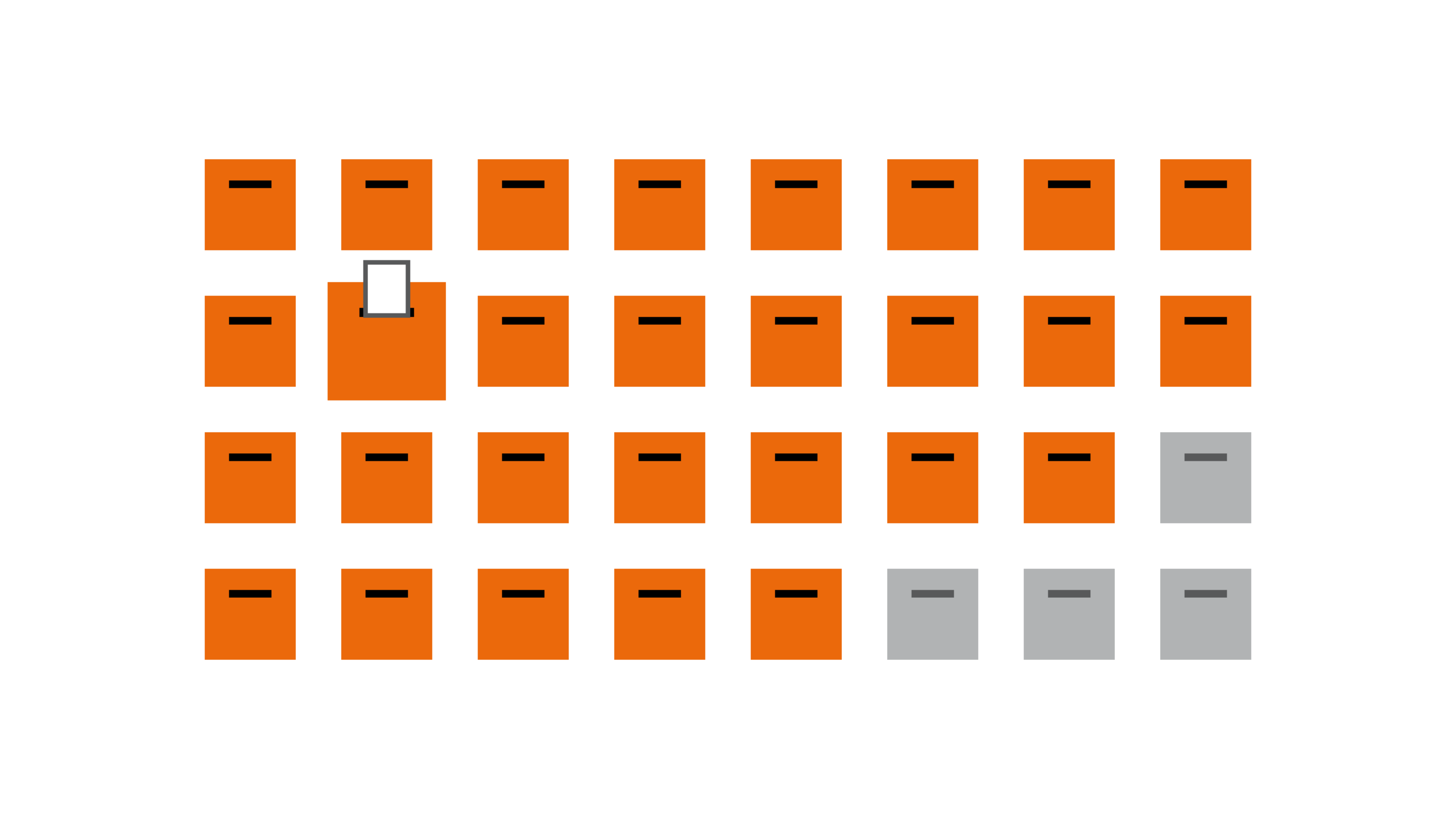
Twenty-three of the 24 registered councils are up for election on 8 November 2026. Twenty-one are elected directly; two are elected by an electoral assembly because fewer than 40% of those communities are enrolled in their special voter register.
Click a column heading to sort. The 2022 figures cover direct elections only - turnout and register figures do not exist where a council was elected by an electoral assembly.
| National minority council▼ | How elected in 2026 | How elected in 2022 | Enrolled voters, 2022 | Turnout 2022 |
|---|
Sources: decision calling the elections for members of national minority councils (Official Gazette of the RS, no. 90/26, 18 September 2026); Statistical Office of the Republic of Serbia, official results of the 2022 elections. The Albanian council was also elected in 2023 in an early election through an electoral assembly, which did not shift the regular cycle. The Executive Board of the Federation of Jewish Communities of Serbia performs the function of a national council by law, so there is neither an election nor a special voter register.
The right to vote belongs to a member of a national minority who meets the general conditions for acquiring the right to vote and who is enrolled in the special voter register established by the Ministry for Human and Minority Rights and Social Dialogue. Members of a national minority are entered into the voter register only at their own request.
How many special voter registers are there?
There are 23 special voter registers, corresponding to the registered national minority councils, with the exception of the Federation of Jewish Communities of Serbia, which has a specific institutional status.
How many voters will be entitled to vote, and at how many polling stations?
The total number of voters and their distribution across polling stations is determined by a decision of the Ministry for Human and Minority Rights and Social Dialogue 15 days before the elections, once the special voter registers are closed - for these elections on 23 October. The number of polling stations is determined beforehand by the Republic Electoral Commission, by 18 October at the latest.
At the provisional closing on 16 September 2026, 442,884 voters were enrolled in the special voter registers.
Context
The most recent amendments to the legislative framework concerning national minorities - the Law on the Protection of the Rights and Freedoms of National Minorities and the Law on National Minority Councils - were made in 2018, following the European Commission's report on Serbia.
However, in 2025 the European Commission again pointed to problems in the area of minority protection in Serbia. In its latest report, it recommended that Serbia adopt the action plan on national minorities currently in preparation and demonstrate, through better data collection, concrete improvements in the effective exercise of the rights of persons belonging to national minorities, including reference to the goals set out in the Poznan Declaration on Roma Inclusion. It particularly emphasized that, in the context of minority protection, Serbia's institutional framework is incomplete, as the new action plan is being significantly delayed, while members of minorities continue to face discrimination. It stressed that Serbia must take into account the new, fifth opinion of the Advisory Committee of the Council of Europe's Framework Convention. It also noted that members of the Albanian national minority continue to express concern about the way the police verify places of residence in the south of the country, which has led to the passivization of certain addresses.
There are 78 registered national minority political parties in Serbia. The question of national minority participation in parliamentary and local elections attracts particular public interest, because of the numerous irregularities recorded in the certification of minority electoral lists.
The previous elections for national minority councils differed considerably in terms of the framework under which they were conducted. The elections in 2002 and 2006 were held in line with a bylaw of the ministry responsible for minority issues. At that time, national minority councils were elected only through electoral assemblies. The elections in 2010 and 2014 were held under the Law on National Minority Councils. In 2010 there were 16 direct elections and 3 electoral assemblies, and in 2014 there were 17 direct elections and 3 electoral assemblies, electing the members of 20 national minority councils.
At the elections held on 4 November 2018, a total of 507,183 voters were enrolled in the special voter register. Of that number, 462,759 voters were entitled to vote in the direct elections for 18 national minority councils, at 926 polling stations, while 44,424 voters were enrolled for the 4 national minorities whose council members are elected through an electoral assembly. The most recent elections were held on 13 November 2022, when members of 23 national minority councils were elected - direct elections were held for 19 councils, while 4 were voted on through electors. At that time a total of 456,199 voters were entitled to vote, and a total of 949 polling stations were designated across the country.
In the earliest electoral cycles, elections were organized at approximately 880 polling stations in 149 municipalities. In 2018 the number of polling stations rose to 926, and in 2022 as many as 949 polling stations were designated. The number of polling stations therefore grows from cycle to cycle, but the number of voters does not follow that growth - in 2022, slightly fewer voters were entitled to vote in the direct elections than in 2018, even though one more council was elected directly. Turnout rose to around 45% in 2018 and remained at that level in 2022. More than half of the enrolled members of national minorities still do not elect their representatives to the national councils. Behind that average lie considerable differences between communities - in some, turnout exceeded 55%, while in others it fell below 20%.
The 2026 cycle continues the same trend. At the provisional closing of the registers, 442,884 voters were enrolled, roughly 13,000 fewer than in 2022. At the same time, the number of communities electing their representatives directly has risen from 19 to 21.
Elections for national minority councils, 2014-2022
Direct elections only. Councils elected through an electoral assembly are not shown, since their members are chosen by electors rather than by voters at polling stations.
17 councils · 456,444 enrolled
18 councils · 467,545 enrolled
19 councils · 456,199 enrolled
Share of voters enrolled in each minority's special voter register who cast a ballot. Hover or tap a bar for the underlying numbers.
Source: Statistical Office of the Republic of Serbia, official results of the elections for members of national minority councils, 2014, 2018 and 2022; Ministry for Human and Minority Rights and Social Dialogue for the 2026 figure. The Polish minority first elected its council directly in 2018 and the Russian minority in 2022, so they have no 2014 comparison.
National minority councils in Serbia's legal system
The protection of national minorities is established among the basic principles of the 2006 Constitution of the Republic of Serbia. In addition to individual rights, members of national minorities are guaranteed the collective right to participate in decision-making on matters relating to their culture, education, information and the official use of language and script (Article 75 of the Constitution).
The right of national minorities to elect their national councils in order to exercise the right to self-governance in these areas is provided for. Accordingly, national minority councils may establish institutions, associations, foundations and companies in the areas of culture, education, information and the official use of language and script (Article 10 of the Law on National Minority Councils). Within their competences, national minority councils advise and support local self-government units, the autonomous province and state bodies when adopting decisions relevant to the position of national minorities (Article 10 of the Law on National Minority Councils). They may also establish media outlets in line with their competences, and they take part in the procedure for electing members of the Council of the Regulatory Authority for Electronic Media.
Funding for the work of national minority councils is provided from the state budget (the budget of the Republic of Serbia, the autonomous province and local self-government units), from donations and from other revenues, and is allocated in line with a separate regulation or decision. The annual quota for the allocation of funds in 2026, for all 24 national minority councils, amounts to a total of 306 million dinars.
National minority councils use the Handbook for the Work of National Minority Councils in Serbia, prepared under a joint programme of the European Union and the Council of Europe (in the 2019-2022 period).
The umbrella body for the protection of national minority interests is the Council for National Minorities, chaired by the Prime Minister. The Council is responsible for monitoring and considering the state of the exercise of national minority rights and inter-ethnic relations in Serbia, and the presidents of the individual national minority councils take part in its work.
Legal framework
National minority councils were introduced into Serbia's legal system by the Law on the Protection of the Rights and Freedoms of National Minorities, adopted at the level of the Federal Republic of Yugoslavia in 2002. After the dissolution of the State Union of Serbia and Montenegro, the law remained part of the legal system of the Republic of Serbia. However, this legislation did not precisely regulate the function and competences of national minority councils, nor the procedure for their election.
The election and competences of national minority councils were regulated in more detail by the separate Law on National Minority Councils, adopted by the National Assembly of the Republic of Serbia in 2009. This law has been amended twice - in 2014 and 2018. Conducting the elections for national minority councils was placed within the competence of the Republic Electoral Commission in 2014, while the 2018 amendments were made in order to align the provisions of the law with the Constitution.
The conduct of direct elections is regulated in more detail by the Instruction on Conducting Direct Elections for Members of National Minority Councils (Official Gazette of the RS, no. 100/22), adopted by the Republic Electoral Commission. Matters not regulated by the Law on National Minority Councils are governed by the corresponding application of the Law on the Election of Members of Parliament (Official Gazette of the RS, nos. 14/22 and 47/26), which was amended in 2026.
Although there were no legislative changes, the (re-)establishment of the Ministry for Human and Minority Rights and Social Dialogue in 2020 removed the competence of the Ministry of Public Administration and Local Self-Government over the special voter registers. The regulations in force give the mandate for establishing the special voter registers to the Ministry for Human and Minority Rights and Social Dialogue, while the records are kept by local self-government bodies.
Features of the electoral process
The special voter register is an official record in which members of a national minority who meet the conditions for acquiring the right to vote are enrolled. The record is permanent and is updated regularly.
It is established by the Ministry and kept by the municipal or city administration as a delegated task, until the special voter register is closed. A member of a national minority submits a request for enrolment in the special voter register to the administrative body of the local self-government unit according to their place of residence, or place of stay in the case of internally displaced persons, using a special form.
A voter register is established at the request of at least 5% of the adult members of that minority according to the latest census, but their number cannot be fewer than 300. Accordingly, one national minority may have only one special voter register, and a member of a national minority may be enrolled in only one special voter register.
There are currently 23 special voter registers in Serbia.
Calling the elections
Regular elections for all national minority councils are held every four years, and members of national minority councils are elected either in direct elections or through an electoral assembly.
The minister responsible for minority rights takes the decision to call elections for all national minority councils no earlier than 120 and no later than 90 days before the expiry of the mandate of the last constituted national minority council.
The decision to call the elections sets the election day, starts the deadlines for electoral activities, determines the number of members to be elected to each national minority council, and the manner in which those members will be elected. Each national minority council may have a minimum of 15 and a maximum of 35 members. The number of council members is determined according to the results of the latest census.
Early elections are conducted in cases where a national minority council is dissolved, namely if: the new convocation of the council is not constituted within 30 days of the final election results being determined; the election procedure is suspended; the council does not convene for more than 6 months; the council does not elect a president within 30 days of being constituted or of the previous president's term ending; or the number of council members falls below half.
Direct elections
Under the law, direct elections for members of a national minority council are held if more than 40% of the total number of members of that national minority according to the latest census are enrolled in that minority's special voter register 24 hours before the elections are called, that is, at the moment of the provisional closing of the special voter register.
Direct elections are conducted by the Republic Electoral Commission.
If the conditions for direct elections are not met (fewer than 40% of the members of the minority are enrolled in the special voter register), members of the national minority council are elected through an electoral assembly.
Elections through an electoral assembly
Indirect elections are held if the conditions for direct elections are not met, or in the case of early elections. In elections through an electoral assembly, only delegates vote for the members of the national minority council.
The procedure for election through electors is initiated by a single decision calling the elections, and the date and place of the electoral assembly are published in the media, with a public call to all electors to submit applications to take part.
A member of a minority may become a candidate for elector if they are enrolled in the special voter register and if their candidacy is supported by the prescribed number of voters enrolled in that register. The number of certified signatures required depends on the size of the minority community and is prescribed by law.
A candidate for elector submits an application to the Ministry for approval no later than 30 days before the electoral assembly. The electoral assembly may be held only if a sufficient number of electors whose applications have been approved are present.
The elections are conducted by a three-member board appointed by the Republic Electoral Commission from among experts in electoral procedures. Electors vote in secret, on pre-prepared ballot papers, on which they write the name and the number of the list they are voting for.
Designating polling stations
Polling stations are designated by the Republic Electoral Commission for a minimum of 100 and a maximum of 2,500 voters enrolled in the special voter registers.
Candidacy
Electoral lists may be proposed by groups of voters enrolled in the special voter register, by associations whose aims are pursued in the area of protecting national minority rights, and by national minority political parties.
An electoral list must be supported by the signatures of at least 1%, but no fewer than 50, of the voters enrolled in the special voter register. A voter may support the electoral list of only one proposer with their signature, and signatures of support are certified before the competent body.
Competences of the Republic Electoral Commission
RIK, among other things, organizes the technical preparations for the elections, prescribes the forms and rules for conducting the elections, designates polling stations, certifies electoral lists, determines the collective electoral list, forms polling boards, and determines and publishes the election results.
General deadlines
Calling the elections - no earlier than 120 and no later than 90 days before the expiry of the mandate of the last constituted national minority council
Holding the elections - no later than 15 days before the expiry of the mandate of the national minority council constituted last
Publishing the forms and rules for conducting electoral activities - within 5 days of the decision calling the elections
Determining the collective electoral list - no later than 10 days before election day
Closing the special voter register - no later than 15 days before election day
Report with the overall election results - within 96 hours of the close of the elections
Allocation of mandates - within 3 days of the final election results being determined
Constitutive session of the national minority council - within 20 days of the final election results being determined
Deadlines for the 8 November 2026 elections
The Republic Electoral Commission adopted the timetable on 23 September 2026. It covers direct elections only; a separate procedure applies to the electoral assemblies of the Gorani and Russian communities.
18 September - the decision calling the elections enters into force
23 September - RIK prescribes and publishes the forms and rules for electoral activities
8 October - decision on the number, composition and area of work of the working bodies
18 October - polling stations designated and published; working bodies formed
23 October - last day to submit an electoral list
23 October - the special voter register is closed
25 October, 24.00 - certified extracts from the special voter register delivered to RIK
28 October - the collective electoral list is determined and published; polling boards are formed
28 October - deadline for foreign observers and representatives of foreign states to apply
31 October - deadline for domestic observers to apply
2 November - voters are notified of the day and time of the vote
4 November, 24.00 - last changes to the special voter register after its closing
6 November from 00.00 - campaign silence, until the polling stations close
8 November, 7.00-20.00 - voting
9 November by 20.00 - preliminary results from the polling stations processed
12 November by 20.00 - report with the overall election results
13 November by 24.00 - inspection of the election material at RIK's premises
The electoral calendar for 8 November 2026
The elections were called on 18 September 2026 and the Republic Electoral Commission adopted the timetable of electoral activities on 23 September. These are the deadlines that follow. The timetable covers direct elections only - a separate procedure applies to the electoral assemblies of the Gorani and Russian communities.
Source: Republic Electoral Commission, timetable of electoral activities for the direct elections for members of national minority councils called for 8 November 2026 (02 no. 013-302/26, 23 September 2026); Law on National Minority Councils; Law on the Election of Members of Parliament. Deadlines counted from the determination of the final results are not tied to a fixed calendar date.
Protection of electoral rights
A 48-hour deadline from the publication of a decision on RIK's website applies to objections against the formation of a polling board, against the certification or refusal to certify an electoral list, against the determination of the collective electoral list, and against the denial of the right to supervise the printing of ballot papers.
A 72-hour deadline applies to objections against a decision finding that the results at a polling station cannot be determined, against a decision annulling the vote at a polling station, and against the report with the overall election results. RIK decides on an objection and publishes its decision within the same period.
A request to annul the vote at a polling station must be submitted by 11 November at 20.00, and RIK decides on it within 72 hours.
The party that lodged the objection may appeal to the Administrative Court within 72 hours of the publication of RIK's decision. The court decides within 72 hours of receiving the appeal and the case file.
An administrative dispute against the decision allocating mandates to council members is initiated within 24 hours of the decision being published, and the Administrative Court decides within 48 hours.
Observers at national minority council elections
However, the corresponding application of the Law on the Election of Members of Parliament and the rules of the Republic Electoral Commission make it possible for domestic and international observers to observe the elections.
For direct elections, requests to observe may be submitted by: registered associations whose aims are pursued in the area of elections and the protection of human and minority rights; international and foreign organizations; representatives of foreign states.
For elections conducted through an electoral assembly, requests may be submitted by: registered associations whose aims are pursued in the area of elections and the protection of human and minority rights; international and foreign organizations.
For the elections on 8 November 2026, the deadline for domestic observers is 31 October and for international and foreign organizations and representatives of foreign states 28 October. An application by a foreign observer is forwarded to the ministry responsible for foreign affairs for its opinion, which is given within three days. Authorizations and accreditation cards are issued within three days of the application, or of the receipt of that opinion.
Proposers of certified electoral lists notify RIK of the representatives authorized to oversee the work of the working bodies and polling boards by 28 October, and the work of the Commission itself by 2 November.
By way of comparison, for the elections held on 4 November 2018 the deadline for domestic observers was 29 October and for international observers 24 October. For the elections on 13 November 2022, domestic observers applied by 5 November and foreign observers by 2 November.
Applications are submitted on the forms that the Republic Electoral Commission publishes on its website. When applying, observers specify their areas of observation, that is, whether they will follow the work of the Republic Electoral Commission, RIK's working bodies, polling boards and/or the electoral assembly.