Election day observation report – local elections 2026
Local elections were held on March 29 in 10 local self-government units: Aranđelovac, Bajina Bašta, Bor, Kladovo, Knjaževac, Kula, Lučani, Majdanpek, Sevojno, Smederevska Palanka
03.04.2026.
10 MINUTES READ
Introductory note
CRTA deployed 10 limited-capacity observation missions, applying a methodology grounded in international principles and standards for citizen election observation. The observation was organised through mobile teams, in line with short-term observation practices, which entail wide territorial coverage and direct monitoring of election day proceedings, but without continuous presence at all polling stations.
Throughout election day, teams systematically monitored developments in front of and around polling stations, with multiple visits to polling stations themselves. In total, 85 mobile teams visited 360 out of 415 polling stations (86%) across 10 local self-government units, covering areas where 96% of registered voters in those municipalities were entitled to vote.
Based on data collected from more than 1,200 observer reports and direct insight into the course of election day, the findings below allow for the identification of key patterns and phenomena in the electoral process. Given that observers were not continuously present at all polling stations throughout the entire day, CRTA did not report on voter turnout or election results, nor on the intensity of irregularities and their impact on voters’ will or the final results.
Assesment of election day
Election day was marked by violence and tensions, numerous irregularities at polling stations, as well as inconsistent and selective conduct by the competent institutions. Under such conditions, citizens were to a significant extent deprived of the opportunity to vote freely in a peaceful environment and under conditions that meet basic democratic standards.
Local elections were held on Sunday, 29 March 2026, in 10 local self-government units (LSGs), where 247,949 voters were eligible to vote (3.8% of the total number of voters in Serbia). A total of 50 electoral lists were proclaimed: ruling parties ran on a joint list “Aleksandar Vučić – For Our Family”, while in nine LSGs student lists, joint student-opposition lists, or opposition lists supported by students were registered. In each LSG, at least one electoral list was identified for which, based on authenticity indicators,1The following indicators were taken into account: prior participation of the same or related actors in elections as “proxy” lists; possible organisational links with the ruling party (e.g. assistance in collecting signatures); absence of genuine political activity between elections; and manipulative list names that may mislead voters. there are grounds to suspect that it was a “proxy” list.
The local elections in these 10 municipalities were neither free nor fair, and election day took place in an almost referendum-like atmosphere.
Election day unfolded in conditions of heightened tension, with the presence of organised groups of intimidating appearance near polling stations, as well as citizens openly expressing various political views, including support for students. Crowding was observed at certain polling stations, partly due to the increased number of observers. Attempts to influence the electoral process were noted at some polling stations. In particular, situations were recorded in which “para-observers” close to the ruling party monitored and directed the work of polling boards, while, on the other hand, observers organised through citizens’ assemblies and other observation missions reacted to identified irregularities.
An additional issue was the insufficient knowledge of procedures and rules among many participants in the electoral process, including actors responsible for conducting the elections, such as polling boards and election commissions, representatives of various observation missions, citizens gathered in assemblies and informal groups, as well as political party activists. This led to situations in which some legitimate actions were misinterpreted as irregularities, while actual problems in some cases remained insufficiently recognised. All of the above contributed to an overall impression of tension and extraordinary circumstances.
Election day was marked by serious incidents and entrenched irregularities. Due to the intensity of violence, particularly in Bor, but also in Kula and Bajina Bašta, numerous other problems recorded even in relatively calm areas remained overshadowed. The overall assessment of election day ranges from poor to very poor, and under such conditions the process can hardly be considered elections in the full democratic sense.
The overall assessment of election day ranges from poor to very poor, and under such conditions the process can hardly be considered elections in the full democratic sense.
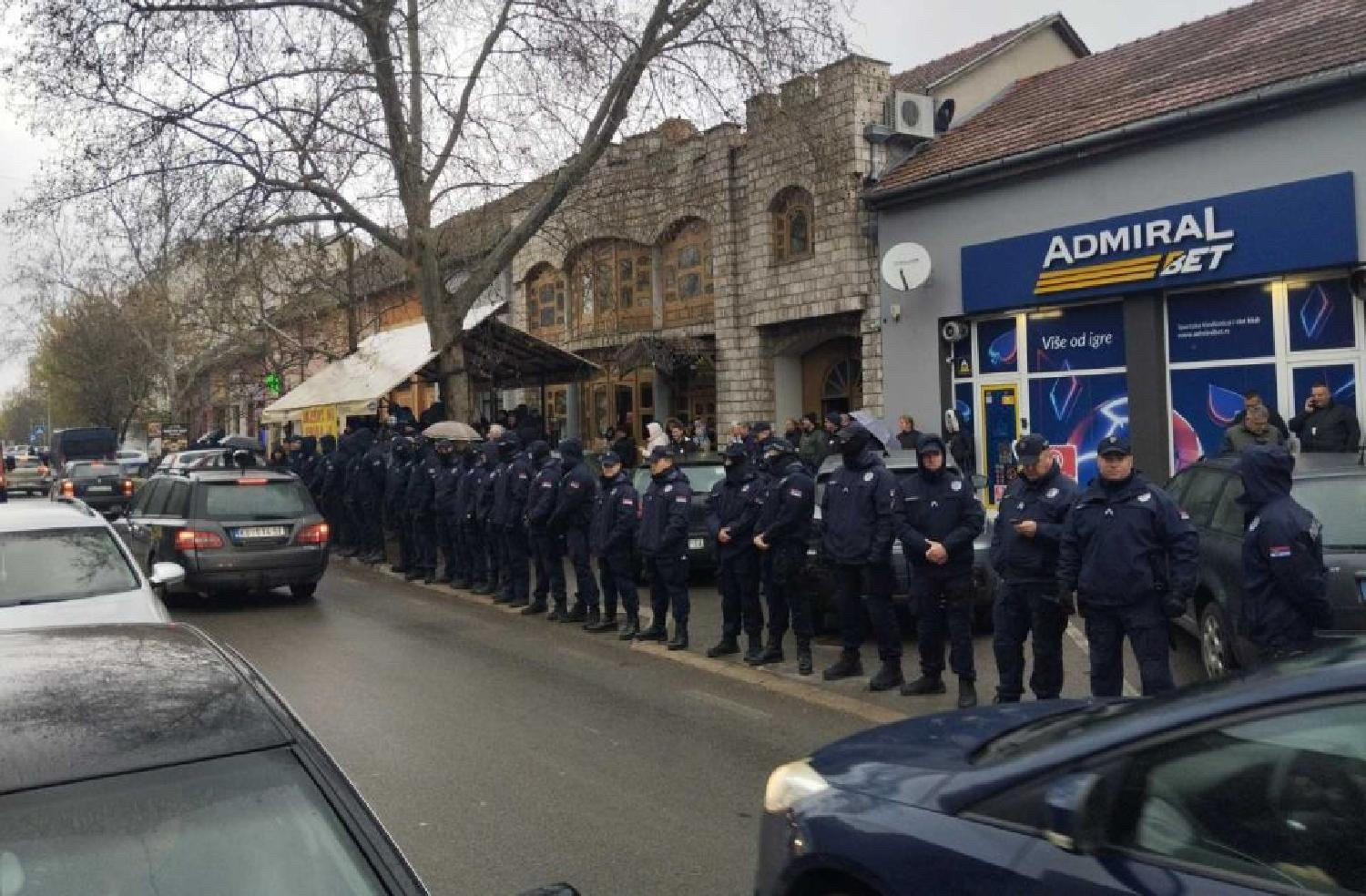
Throughout the day, physical attacks, threats, the presence of organised groups, and intimidation of voters, observers, and journalists were recorded. Particularly concerning was the lack of an adequate police response, as in many cases the police neither protected citizens nor acted against perpetrators. In a significant number of cases, no action was taken to identify and detain perpetrators, even when the police were present during incidents. Such conduct allowed perpetrators to withdraw without consequences, including in cases of attacks on citizens in Bor and Kula, further undermining trust in institutions.
Electoral engineering from previous election cycles, based on strict voter control, evolved in this cycle into a more brutal and overt model of party management of the electoral process. The keeping of parallel records of who voted, public reading of voters’ personal data, mass photographing of ballots and marking them with pre-arranged symbols (such as letters, numbers, initials, and other signs), as well as the organised transportation of groups of voters, were recorded at almost every polling station visited by CRTA’s mobile teams. The secrecy of the vote was in many cases not ensured but systematically undermined through family and group voting, poorly arranged voting booths, and other manipulations tolerated by polling boards.
The scale of deviation from the principles of free and fair elections is further illustrated by numerous testimonies from voters in several municipalities, who reported that after voting they were required to provide proof of how they had voted.
Numerous facilities near polling stations functioned as informal coordination and logistics hubs, as well as locations indicating organised vote-buying activities. This points to the existence of parallel infrastructure operating outside the official electoral process. Particularly concerning is the presence of unidentified individuals and observers with strong indications of links to the ruling party, who in some cases directly influenced the work of polling boards. As in the 2025 local elections, a significant number of observation missions were accredited (31 in total, of which 26 domestic and five international). CRTA has previously pointed out Report on Long-Term Observation of the 2026 Local Elections that many of these missions raise serious concerns regarding their actual role and purpose on election day.
For the coordinated implementation of pressure, intimidation, and other unlawful activities in favour of the ruling party, in addition to informal groups linked to criminal structures, parts of the public sector were also engaged. Elements of the state apparatus were used to exert unlawful influence on the electoral process. Citizens and observers reported recognising among those involved in incidents employees of public institutions and companies from several cities in Serbia. In multiple municipalities, falsification of vehicle licence plates was observed, through replacement or covering of plates to create the impression that vehicles were registered in the municipality where elections were held. Registration stickers on windshields clearly indicated that the vehicles were registered in other cities.
The list “Aleksandar Vučić – For Our Family” won the most votes in almost all LSGs, generally by a narrow margin. However, the total number of votes indicates weaker performance compared to previous local elections, with a decline in support for SNS in all observed municipalities except Kladovo. At the same time, none of the “proxy” lists passed the electoral threshold. In contrast to the ruling parties, which ran on a single list, students and opposition parties participated through various formats, achieving results that varied across municipalities.
In Aranđelovac, Bajina Bašta, Bor, Kula, and Sevojno, lists representing an alternative to the government won over 40% of the vote; in Lučani, Knjaževac, Majdanpek, and Smederevska Palanka over 30%; while the weakest result was recorded in Kladovo, with 26%. Such results indicate that students and opposition parties, regardless of how they participated, achieved significantly better results than the alternative to the ruling parties in the previous local elections.
Results indicate that students and opposition parties, regardless of how they participated, achieved significantly better results than the alternative to the ruling parties in the previous local elections.
Election day bluntly confirmed patterns identified during the campaign, as highlighted by CRTA’s Observation Mission through long-term observation: extreme inequality among participants, misuse of public resources and offices, the criminalisation of institutions, and the existence of an extensive clientelist network that reaches its full effect on voting day.
Police protecting the ruling party HQ in Kula. Photo: Fonet/021
Work of the electoral commissions on election day
Local election commissions acted inconsistently on election day, which in certain cases called into question the legal certainty and transparency of the conduct of elections. In addition to a lack of transparency and inconsistent practices, unlawful decisions were also recorded, such as decisions permitting the use of mobile phones at polling stations in some municipalities. At the same time, the work of election commissions revealed a lack of capacity and a basic understanding of the legal framework governing the conduct of elections.
Certain election commissions adopted differing rules regarding the use of mobile phones. Thus, their use was permitted for a limited period in Aranđelovac, Bajina Bašta, Bor, Knjaževac and Sevojno, while in other municipalities the use of mobile phones was completely prohibited, in accordance with the law.
An inconsistent approach was particularly evident in the accreditation of observers and their access to polling stations. Election commissions applied varying identification requirements for observers, in some cases requiring ID card numbers, and in others personal identification numbers. Procedural shortcomings were observed in certain municipalities: in Kladovo, authorisations for observation were not delivered to polling boards, while in Kladovo and Knjaževac observer accreditations were not issued. Additionally, in Kladovo, Knjaževac and Majdanpek, a practice was recorded whereby polling boards required observers to sign attendance records in advance, which is not in accordance with the law.
Preliminary assessment of the election day by the Delegation of the Congress of local and regional authorities of the Council of Europe
Irregularities recorded by CRTA’s observers during election day were also noted by independent international observers from the Congress of Local and Regional Authorities of the Council of Europe. In its preliminary statement, it was emphasised that elections conducted without violence, and with equal conditions ensured for all participants, are essential for strengthening trust in the electoral process.
The statement also noted that violent incidents were recorded, particularly in Aranđelovac, while tensions, heated disputes, and the presence of larger groups of people, often unidentified and sometimes masked, and perceived as intimidating, were registered in almost all observed municipalities.
The delegation pointed to a further deepening of the problem of the blurring of the line between the state, local authorities, and the ruling party compared to its previous observation mission in 2022. This finding is in line with ODIHR recommendations, which, in its report following the 2024 local elections in Belgrade, highlighted the need for a clear separation between the state and the ruling party as a priority.
In its recommendations, the Council of Europe delegation emphasized the need for the competent authorities to consider introducing a unified electoral cycle for local elections, in order to reduce the risks of so-called “electoral tourism” and the effects of a continuous campaign, as well as to allow for a stronger focus on local issues.