Dozens of Acts Illegally Adopted in a Single Session of the National Assembly
12.02.2025.
4 MINUTES READ
In this article
This article in one minute
The Second Session of the Second Regular Sitting of the National Assembly of the Republic of Serbia, held on November 25, 2024, was supposed to be devoted to debates on as many as 68 legal acts, including 54 laws, as well as the 2025 state budget.
However, through a series of serious procedural violations, the legality of adopting these acts was trampled upon. Provisions of the Constitution, the Law on the National Assembly, the Rules of Procedure of the National Assembly, and international legal standards were breached. Fundamental democratic principles and transparency in decision-making were undermined.
In CRTA’s assessment, given the scope and gravity of the violations of rights and procedures committed during the disputed session, as detailed in the remainder of this document, the parliament reached the lowest point in its history. The legislative procedure was brutally abused, and debate as a key element in the decision-making process on laws and other state acts was effectively abolished.
Within the constitutional framework, the National Assembly is not a mere instrument for automatically confirming draft laws. As the highest representative body through which citizens exercise their sovereignty, the Assembly is the most important institution of democratic decision-making, which unequivocally implies that debate is an essential element of the procedure.
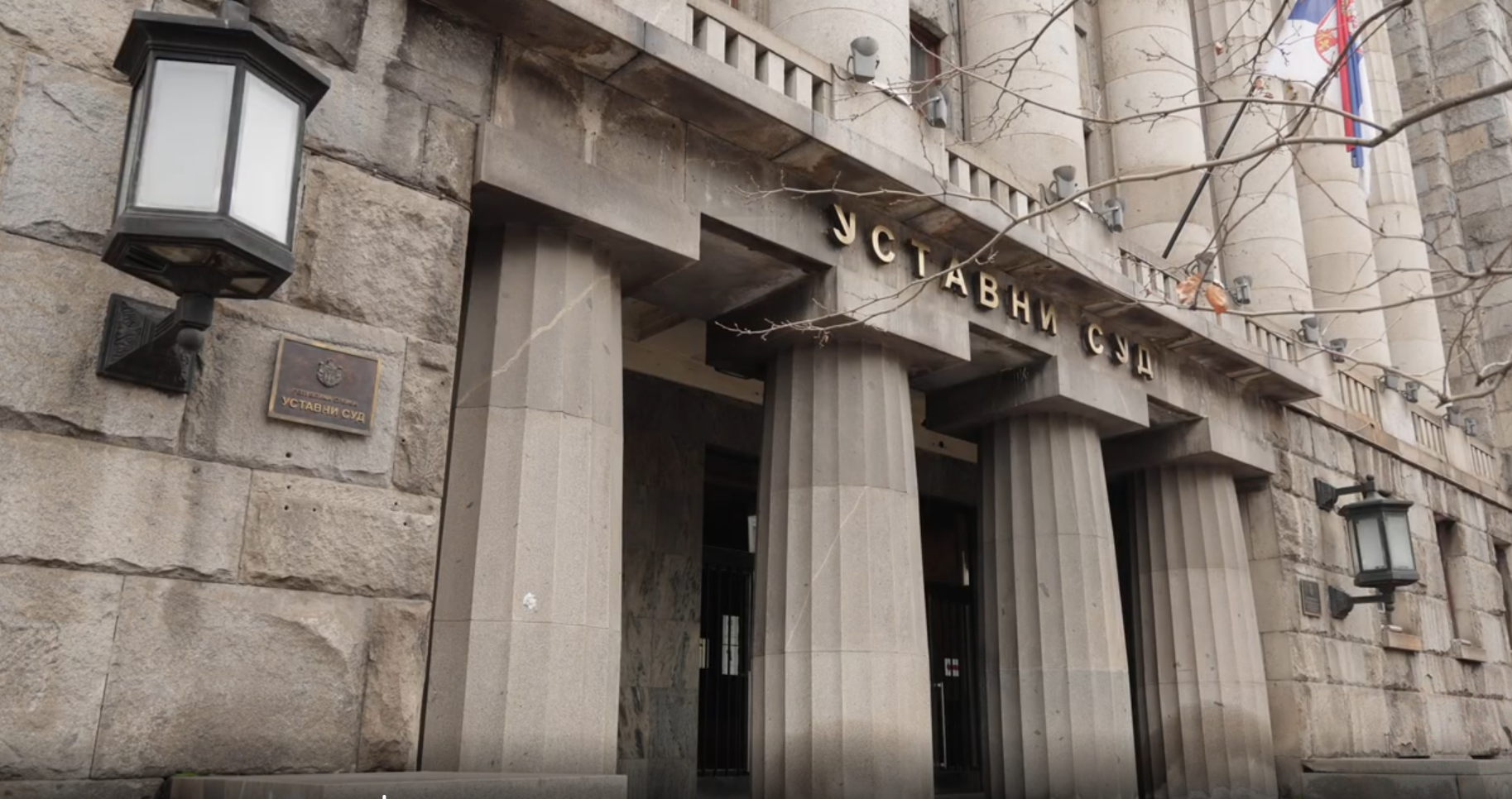
Aware of the seriousness of the degradation of the power and importance of the National Assembly, and in accordance with Article 168, paragraph 2 of the Constitution of the Republic of Serbia, CRTA has initiated proceedings before the Constitutional Court to review the constitutionality and compliance with ratified international treaties of all 54 laws adopted on voting day, November 27, 2024.
The acts whose legality of adoption is challenged by CRTA’s initiative include: the 2025 Budget Law, the Final Account for 2023, a set of financial laws, a package of laws in the field of energy and environmental protection (including the lifting of the moratorium on nuclear energy production), amendments to the Criminal Code concerning attacks on teachers, healthcare and social workers, laws related to public administration reform, gambling regulation, anti-money laundering measures, international borrowing in the amount of half a billion euros, and international cooperation agreements.
Debate is a necessary and essential element of the law-making process, which was disregarded in the adoption of the Budget Law. The National Assembly is obliged to conduct its work in accordance with the Constitution and the law. The principle of legality, in both its formal and substantive sense, permeates the concept of the rule of law.
CRTA’s legal team has presented a series of arguments confirming that the adopted acts are not in compliance with the Constitution:
1. Unlawful restriction of debate
At the session, debate on 68 unrelated laws was merged, contrary to the Rules of Procedure (Article 157), which allow joint debate only for mutually related proposals.
Focused debate on critically important laws such as the Budget Law, a key act for public finances, was prevented.
A request to extend the debate time was rejected, although the Rules of Procedure (Article 97) provide for the possibility of extending discussion.
2. Manipulation of procedures
The session was convened within a shorter deadline than prescribed (less than seven days), hindering MPs’ preparation, without explanation from the Speaker of Parliament.
The titles of the laws were not fully read out during the session, causing confusion and violating Articles 88–93 of the Rules of Procedure, which require the clear determination of the agenda.
The debate in detail on the budget was practically not held. The Speaker opened and closed the discussion without specifying the particular articles and amendments under consideration, and this occurred under conditions in which order in the session was not ensured.
3. Obstruction of amendment consideration
More than 100 amendments to the budget were not considered at all, nor were their proposers allowed to explain them, contrary to Article 158 of the Rules of Procedure.
Meetings of the competent committees, where amendments were required to be considered, were not held, violating Article 155 of the Rules of Procedure and effectively excluding MPs from the legislative process.
The opposition was denied the right to express its position on the budget during debate, thereby violating the right to legislative initiative guaranteed by the Constitution (Article 107).
4. Voting and procedural abuses
In order to secure a sufficient number of votes, the Speaker of the National Assembly unlawfully extended the voting time to 150 seconds instead of 15, enabling MPs from the ruling majority to enter the chamber afterward and vote, which constitutes an obvious procedural manipulation (Article 126).
The Speaker adjourned the session without a clear announcement of the vote, violating Articles 87, 102, and 158 of the Rules of Procedure.
5. Violation of constitutional and democratic principles immediately prior to the session
A motion of no confidence in the Prime Minister was rejected despite having the support of 83 MPs (a minimum of 60 is required), constituting a gross violation of Article 130 of the Constitution.
By rejecting the proposal to establish an inquiry committee on responsibility for the collapse of the canopy in Novi Sad, the National Assembly avoided its obligation to exercise its oversight function.
We call on the Constitutional Court of Serbia to act on this initiative without unnecessary delay, in the hope that it will defend the principles of representative democracy and the fundamental values of the Republic of Serbia, and restore the conduct of the National Assembly within the framework defined by the Constitution and the law.