

Army officer shoots live ammo
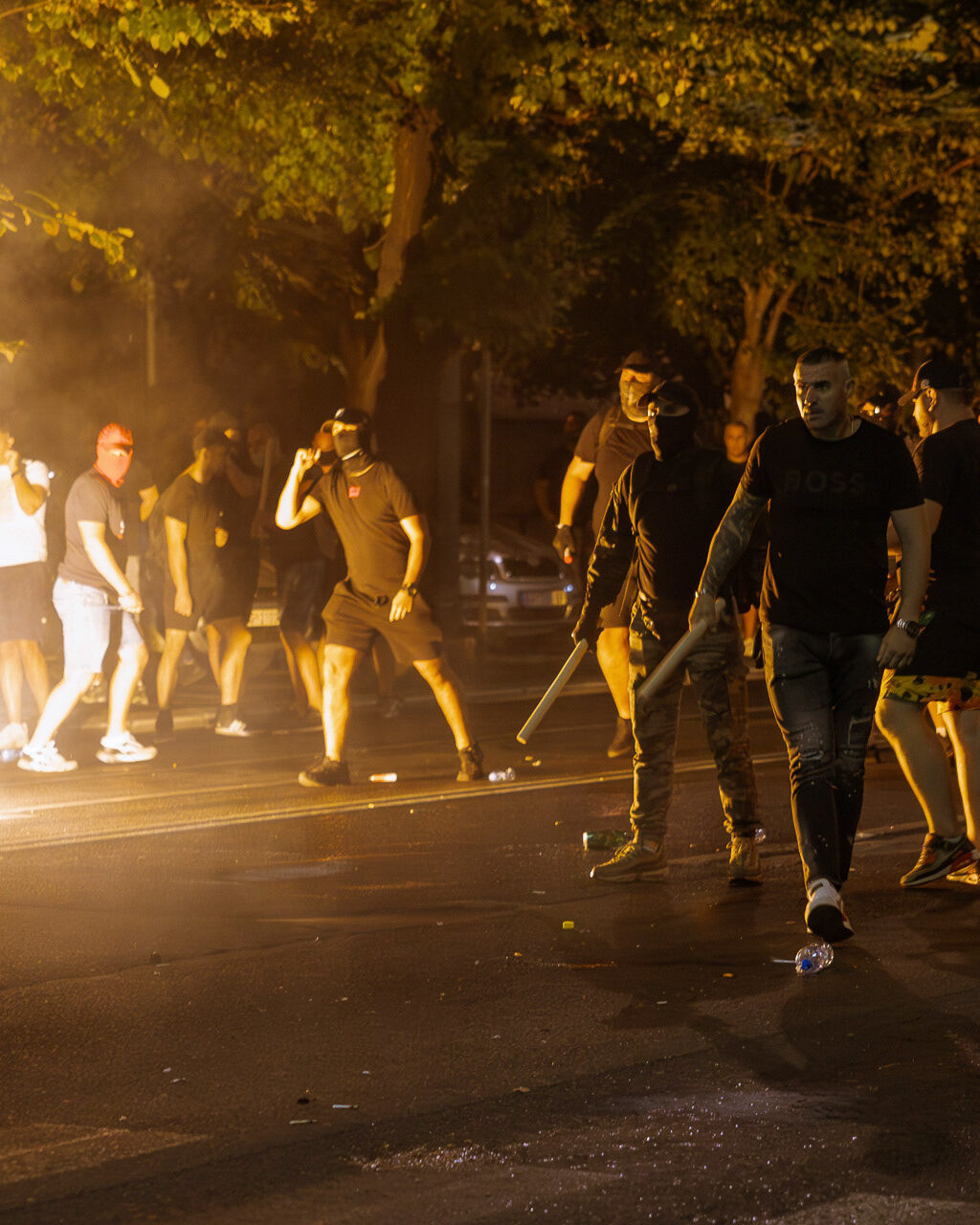
One of the most alarming incidents occurred on 13 August in Novi Sad, when a warrant officer of the Serbian Army fired a live round into the air near SNS premises during clashes with protesters. According to the Military Security Agency, the soldier—part of the “Cobras” military protection unit—said he fired the warning shot after a large group allegedly surrounded the unit with sticks, stones, flares, and stun grenades. The use of live ammunition during a civilian protest represents a rare and serious escalation in Serbia’s protest environment and raised questions about the deployment of military protection units during political unrest.
Treatment of detainees and allegations of abuse
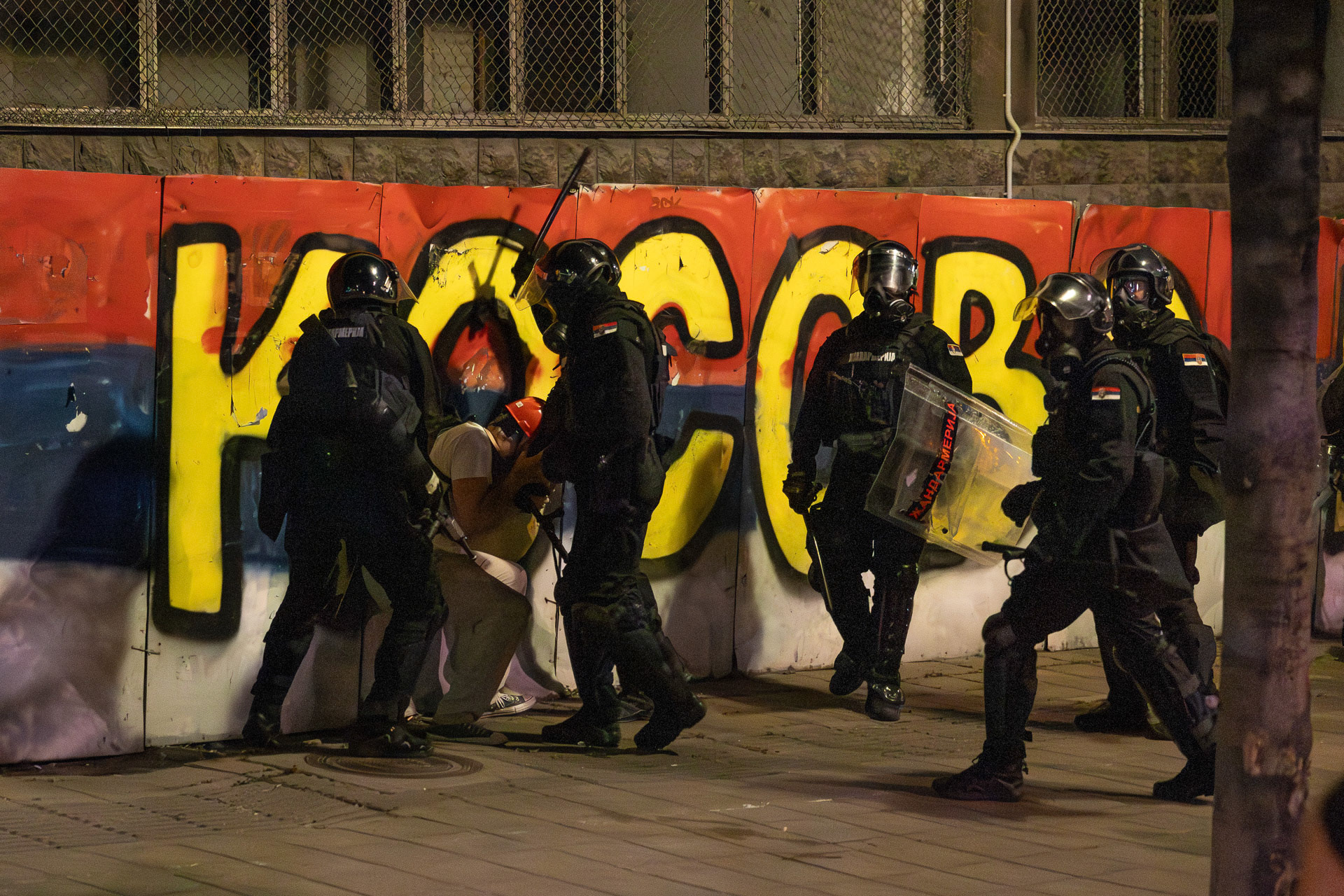
Following the clashes, multiple incidents raised serious concerns about the treatment of detained protesters. On 15 August, footage circulated from a police training centre in Novi Sad showing detainees from the protests forced to kneel facing a wall
https://www.novosti.rs/hronika/hapsenja-i-istraga/1518365/blokaderi-siledzije-uhapseni-novom-sadu-video
while police officers stood behind them. The images, initially published by tabloid media, triggered strong criticism from civil society groups
https://crta.rs/podnete-krivicne-prijave-u-vezi-sa-dogadjajima-na-protestima/
, who described the treatment as cruel and degrading and indicative of the criminalization of protest participants.
Additional allegations emerged from Belgrade protests on 14 August, where detained students reported physical assaults and threats of rape https://www.danas.rs/vesti/drustvo/studentkinja-optuzba-marko-kricak-mup/ while being held inside a government building. One student reported being slapped and having her head pushed against a wall during questioning. The Ministry of Interior denied that the police units involved had committed abuses, but the claims have raised serious concerns about possible violations of basic human rights and abuse of authority during detention procedures.
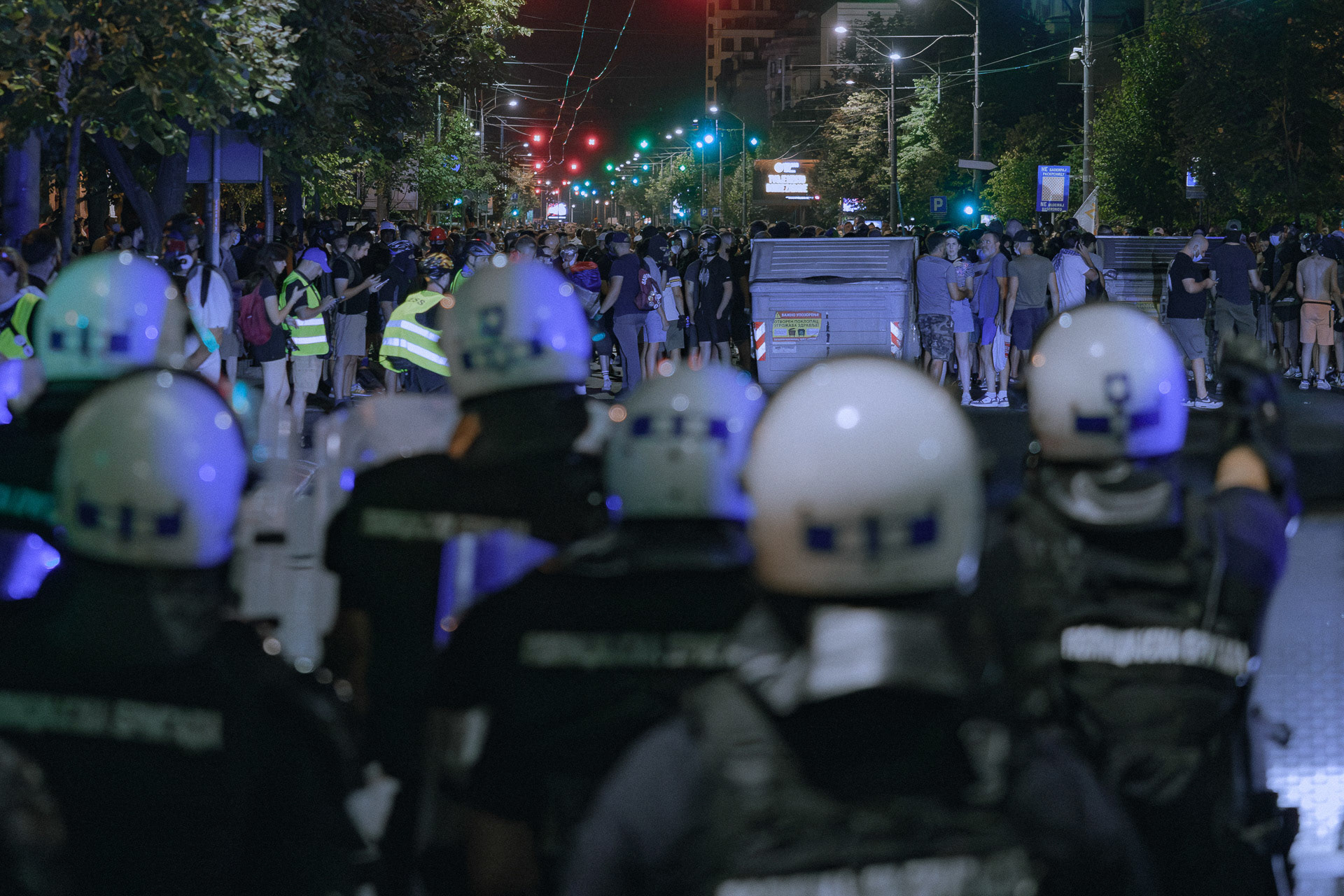
Reports of excessive force were not limited to detention facilities. In Valjevo on 14 August, video footage https://nova.rs/vesti/hronika/okrutno-postupanje-policije-u-valjevu-svirepo-tukli-gradjane-vadili-ih-iz-lokala-i-udarali-snimci-uznemirili-javnost/ showed riot police beating two young men, reportedly underage, with more than a dozen officers participating in the assault. Other footage from protests also showed police wielding pistols or using batons against demonstrators, further increasing concerns about disproportionate use of force.
Additional allegations emerged from Belgrade protests on 14 August, where detained students reported physical assaults and threats of rape https://www.danas.rs/vesti/drustvo/studentkinja-optuzba-marko-kricak-mup/ while being held inside a government building. One student reported being slapped and having her head pushed against a wall during questioning. The Ministry of Interior denied that the police units involved had committed abuses, but the claims have raised serious concerns about possible violations of basic human rights and abuse of authority during detention procedures.
Reports of excessive force were not limited to detention facilities. In Valjevo on 14 August, video footage https://nova.rs/vesti/hronika/okrutno-postupanje-policije-u-valjevu-svirepo-tukli-gradjane-vadili-ih-iz-lokala-i-udarali-snimci-uznemirili-javnost/ showed riot police beating two young men, reportedly underage, with more than a dozen officers participating in the assault. Other footage from protests also showed police wielding pistols or using batons against demonstrators, further increasing concerns about disproportionate use of force.
Escalating rhetoric and institutional response
The escalation of violence occurred alongside increasingly inflammatory rhetoric from senior government officials and pro-government media. President Aleksandar Vučić delivered three public addresses during the crisis, warning of alleged attempts to destabilize Serbia and announcing further arrests.
https://www.danas.rs/vesti/politika/vucic-obracanje-palata-srbija/
Officials repeatedly framed the protests as part of a foreign-funded “color revolution”,
https://n1info.rs/vesti/vucic-ispred-razbijenih-prostorija-sns-cim-se-neko-pojavi-beze-drzava-ce-snaznije-goniti-demonstrante/
while pro-government tabloids published headlines claiming protesters were attempting to start a civil war or carry out mass violence.
At the same time, authorities released limited information about arrests, departing from the previous practice of publishing full detention figures after protests. The Ministry of Interior reported only partial data, raising concerns about transparency and making it difficult to assess the true scale of enforcement actions against demonstrators.
At the same time, authorities released limited information about arrests, departing from the previous practice of publishing full detention figures after protests. The Ministry of Interior reported only partial data, raising concerns about transparency and making it difficult to assess the true scale of enforcement actions against demonstrators.

Photos: Gavrilo Andrić, protesti.pics
Growing confrontation and risk of further escalation
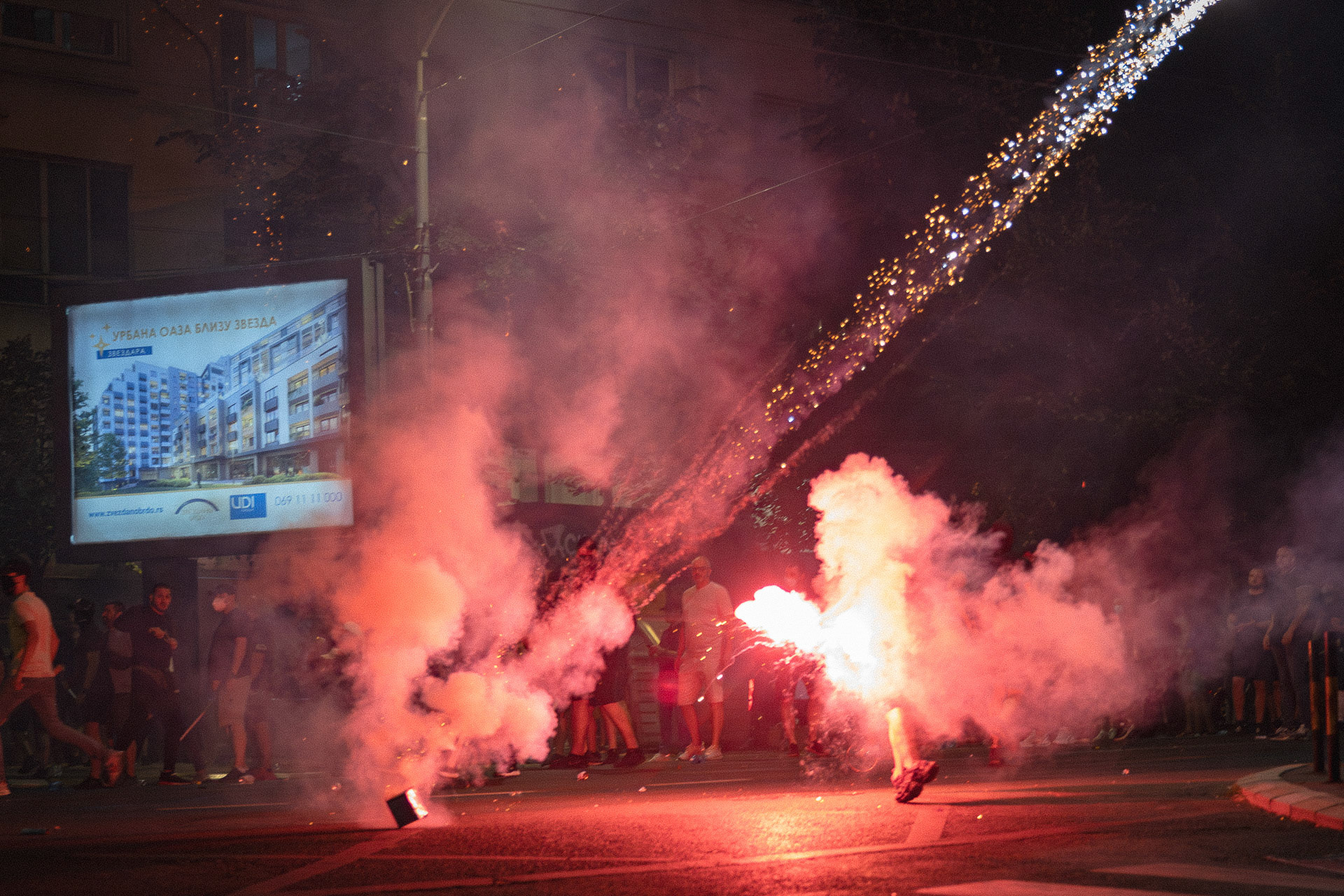
The confrontation between protesters and authorities intensified further in the days that followed. Demonstrators demolished SNS premises in Novi Sad on 14 August, while protests in Valjevo on 16 August escalated into arson attacks on SNS headquarters, the municipal building, and the Prosecutor’s Office. Another SNS office was attacked in Belgrade on 18 August.
Taken together, these developments point to a rapidly escalating cycle of confrontation, in which violent rhetoric, police repression, and radicalization among protesters reinforce one another. The use of live ammunition, allegations of abuse against detainees, and growing political polarization suggest that the protest crisis in Serbia has entered a significantly more dangerous phase, with increasing risks of further violence and institutional breakdown.
Taken together, these developments point to a rapidly escalating cycle of confrontation, in which violent rhetoric, police repression, and radicalization among protesters reinforce one another. The use of live ammunition, allegations of abuse against detainees, and growing political polarization suggest that the protest crisis in Serbia has entered a significantly more dangerous phase, with increasing risks of further violence and institutional breakdown.
Claims that the canopy collapse was a “terrorist act”
Senior government officials have also increasingly framed the collapse of the railway station canopy in Novi Sad on 1 November 2024, which killed 16 people and triggered the current protest wave, as part of a broader destabilization plot. On 18 August, Speaker of the National Assembly Ana Brnabić stated
https://n1info.rs/vesti/brnabic-ponovo-o-savetodavnom-referendumu-za-nju-je-pad-nadstresnice-diverzija/
that the collapse had been “a terrorist act aimed at initiating a color revolution.” Similar claims have been repeated by other officials in recent weeks as part of the narrative that protests represent a coordinated attempt to destabilize the state. However, the Higher Public Prosecutor’s Office in Novi Sad previously stated
https://www.istinomer.rs/analize/pad-nadstresnice-je-diverzija-tvrde-botovi-seselj-i-borojevic/
that the canopy collapse was not the result of a terrorist act, contradicting the claims made by political leaders.
Tabloid narratives
The escalation of tensions has also been accompanied by highly inflammatory coverage in pro-government tabloid media, which have portrayed protesters as violent extremists allegedly preparing acts of mass violence. Headlines in several tabloids claimed demonstrators were attempting to “burn people alive,” “start a civil war,” or replicate the events in “Odessa 2014.” Such reporting reinforced official narratives framing the protests as part of a broader destabilization campaign and contributed to a climate of fear and polarization around the demonstrations.
Reaction from Moscow
The developments also prompted international political reactions. On 17 August, the Russian government issued a statement condemning the street protests in Serbia and warning about the presence of forces allegedly seeking to destabilize the country. President Aleksandar Vučić welcomed the statement, presenting it as support for the government’s position regarding the protests and claims that the demonstrations are part of a foreign-funded “color revolution.” Russian journalists were also present at the president’s public address on 18 August, where similar allegations were reiterated.