Brief

Court overturned electoral commission rulings at polling station 1 in Aranđelovac, exposing procedural failures

The Higher Court in Kragujevac upheld the appeals filed by the student list, finding that voter complaints submitted electronically without a digital signature were incomplete and had to be rejected. The ruling reveals serious procedural shortcomings in how the Aranđelovac electoral commission handled complaints.
14.04.2026.
6 MINUTES READ

In this article

This article in one minute
At the local elections held on 29 March 2026, polling station 1 in Aranđelovac produced a result in favor of the student list "Students for Aranđelovac - Youth wins" over the ruling coalition list. Following election day, five voters filed complaints alleging that the mobile voting commission either failed to deliver voter authorization certificates or did not visit their address at all. The Aranđelovac electoral commission upheld the complaints and annulled voting at the polling station. The student list appealed to the Higher Court in Kragujevac, which upheld the appeals. The court found that complaints submitted electronically in PDF format without a qualified digital signature lacked the required signature under the Law on Local Elections, and had to be rejected as incomplete. The court also found that the complaints contained only unsubstantiated claims, without concrete evidence of the alleged irregularities. The rulings are final. No repeat of voting at polling station 1 will take place. The court did not rule on the substantive question of whether the mobile commission's failure to deliver authorization certificates or to visit voters' addresses constituted a violation of voting rights. CRTA's analysis of the proceedings identifies significant procedural failures in the electoral commission's conduct: decisions were issued without prior formal review of complaints, five separate rulings were issued on effectively identical grounds, and the reasoning lacked precision. Additionally, Serbia's public broadcaster RTS published an inaccurate legal interpretation claiming the electoral commission could appeal to the Supreme Court - which is not possible in electoral disputes.

Background and process

On 29 March 2026, local elections were held. At polling station 1, "Primary school Sveti Sava" in Aranđelovac, 1,153 voters cast ballots. The list "Aleksandar Vučić - Aranđelovac, our family!" received 510 votes, while the list "Students for Aranđelovac - Youth wins" received 611 votes. In its election day observation report, CRTA noted that throughout the day there were strong indications of vote buying near polling stations 1 and 2, including money changing hands after voting and voters being directed toward a building that functioned as a logistical center of the ruling party.

On 2 April, the last day of the deadline, six complaints were filed alleging irregularities in the voting process at polling station 1. The complaints - handwritten and in free form - were submitted by Jagoda Preković, Milan Preković, Rodoljub Agantunović, Ljiljana Tanasijević-Kovačević, and Saša Glišić.

Five complaints concerned the same irregularity - one that occurred during mobile voting. The voters stated that they had been prevented from voting because the mobile voting commission did not deliver voter authorization certificates, providing only ballots. One complaint states that the commission did not visit the voter's address at all, even though the voter had registered for mobile voting.

Decisions of the Aranđelovac electoral commission

The electoral commission upheld five complaints and annulled voting at the polling station, while dismissing one complaint as submitted by an unauthorized person.

The commission noted that the polling station record showed that 22 voters had voted outside the polling station, with no authorization certificates signed by any of them.

On the complaints concerning the absence of authorization certificates, the commission found violations of the complainants' rights, concluding that the polling board had unlawfully prevented them from voting - a finding that must result in the annulment of voting at the polling station. The same reasoning was applied to the complaint concerning the mobile commission's failure to visit a voter's address.

Appeals by the student list

The submitter of the list "Students for Aranđelovac - Youth wins" filed appeals with the Higher Court in Kragujevac against all five rulings, contesting them in full and on all legal grounds.

The arguments in the appeals focused primarily on formal deficiencies in the complaints, questions regarding the identification of the persons claiming their voting rights had been denied, and doubts about the credibility of the complaints.

Rulings of the Higher Court in Kragujevac

The court upheld the appeals, overturned the rulings of the Aranđelovac electoral commission, and rejected the voter complaints as incomplete.

The electoral commission submitted responses to the appeals, characterizing them as inadmissible - on the grounds that they were not filed by the original complainants, and that the student list did not have such authorization under the agreement on the formation of the citizens' group. The commission also noted that the complaints did not include voter personal data for reasons of data protection, and that the complaints, though submitted electronically, had been properly received.

The court found that the conclusion of the first-instance body - the electoral commission - could not be accepted as correct. The ruling emphasizes that, given that the complaints were submitted by email in PDF format and were not accompanied by a qualified electronic signature, they are considered to lack the complainant's signature required under the Law on Local Elections, and therefore had to be rejected.

The court further noted that the complaints contained only assertions, but no evidence in the form of a precise description of the action and identification of the person who performed it - also a legally required element under the law.


On this basis, the Higher Court in Kragujevac established the following legal positions: a qualified electronic signature is a required element of a complaint submitted electronically, in accordance with the Law on General Administrative Procedure, the Law on Electronic Documents, and the Law on Local Elections; and a complaint must contain specific evidence, not merely assertions about an electoral irregularity.

The court did not, however, address in broader terms the nature of the irregularity relating to mobile voting - whether the commission's failure to visit a voter's address or to deliver an authorization certificate constitutes a denial of voting rights.


Epilogue

The rulings issued by the Higher Court in Kragujevac are final and binding (they contain no instruction on legal remedy), meaning there is no doubt that voting at polling station 1 will not be repeated.

Conclusion and CRTA's position

On the conduct of the electoral commission

Analysis of the Aranđelovac electoral commission's conduct reveals significant shortcomings in the precision of decision-making and procedural rules. Deciding on identical complaints through multiple separate rulings, without prior review of their formal completeness, resulted in legally untenable decisions. As a result, substantive oversight in a case of alleged electoral irregularities was absent - pointing to the need to improve the work of electoral commissions.

Procedural inconsistency

The question arises whether the electoral commission acted formally correctly when it decided on complaints of identical and closely related content through separate rulings, annulling voting at the same polling station five times over.

The Law on General Administrative Procedure - applicable in the absence of specific procedural provisions in electoral regulations - allows the consolidation of proceedings where there is unity of factual and legal issues. The electoral commission could therefore have decided on these complaints through a single ruling, with identical reasoning and the same effect, thereby ensuring legal certainty and procedural clarity.

Flawed procedural approach

When deciding on the complaints, the electoral commission entered into the merits and established a violation of rights without first verifying whether the complaints were formally complete. By proceeding without such prior review, it issued legally untenable decisions.

Deficiencies in the reasoning of the decisions

The electoral commission resorted to template-based decision-making, without analyzing the substance of the potential violation. The reasoning contains no precise grounds for upholding the complaints, nor is there a direct link between the legal basis and the conclusions reached.

On inaccurate reporting by the public broadcaster

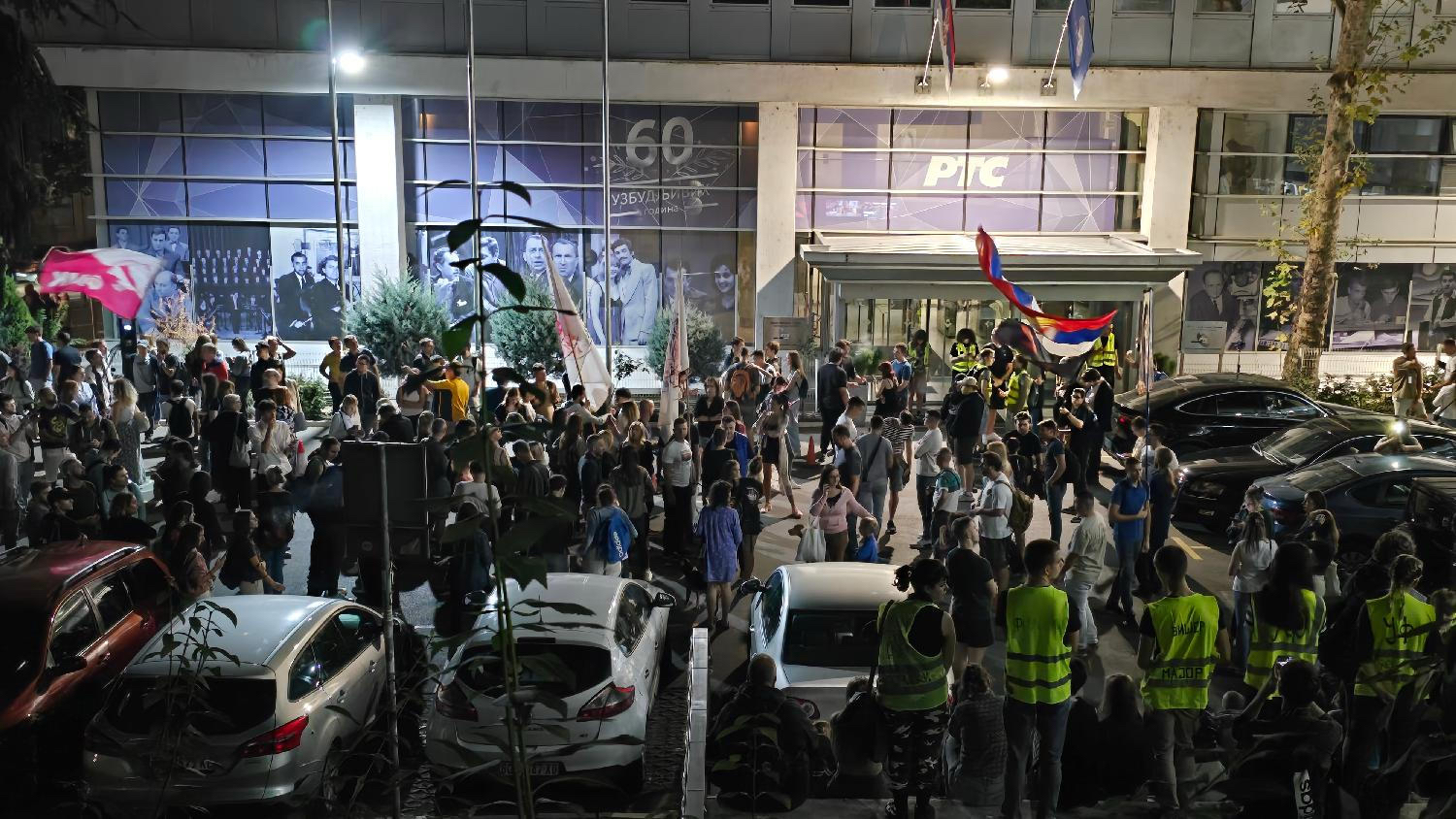
On 9 April, RTS published a news item titled "Court decides - there will be no repeat of elections at one polling station in Aranđelovac," which stated that the Municipal Electoral Commission in Aranđelovac retained the option to appeal to the Supreme Court. The same claim was reproduced by numerous other outlets.
However, no such option existed. In electoral disputes, the court represents the final instance, and the only avenue for challenging court decisions on electoral actions is a procedure before the Constitutional Court.

Related Articles

CRTA+ is part of CRTA’s work to document developments related to democracy, the rule of law, and accountability in Serbia.
Crta @ 2026. All rights reserved.